1 Local Disruptions

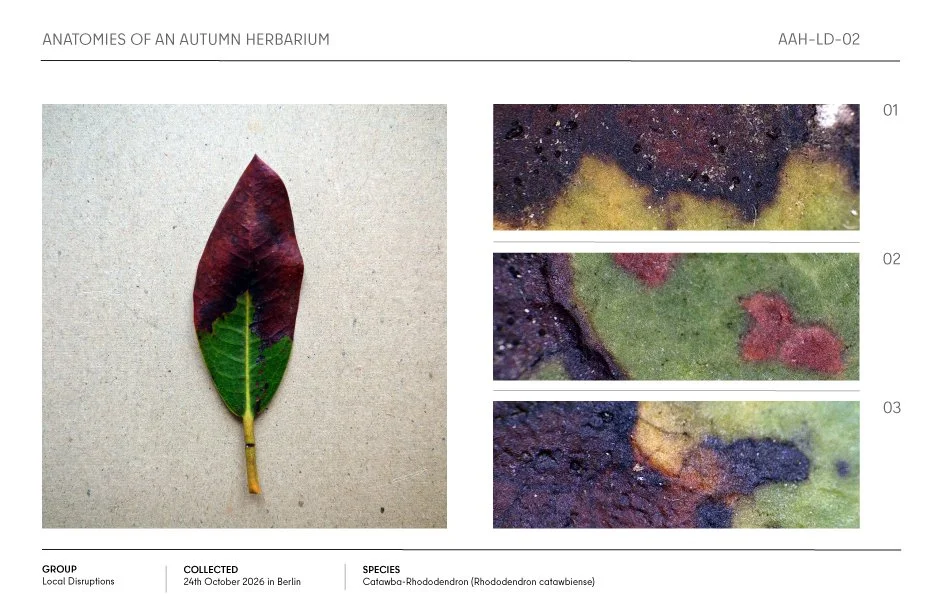
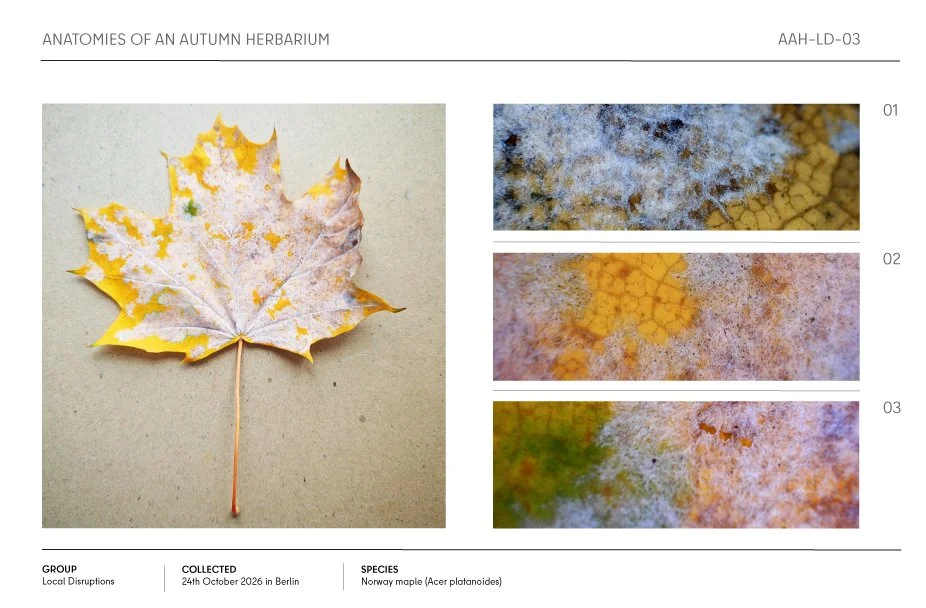
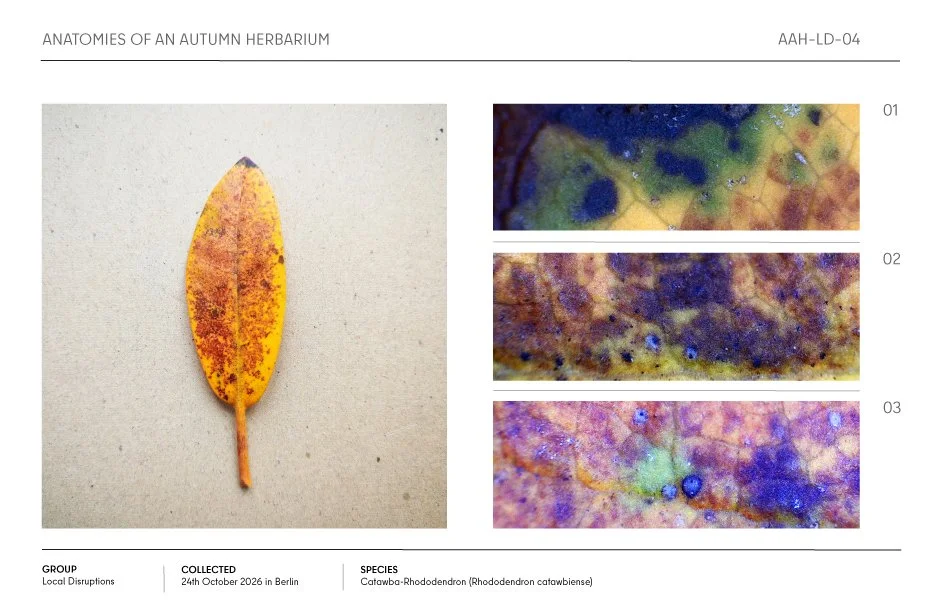
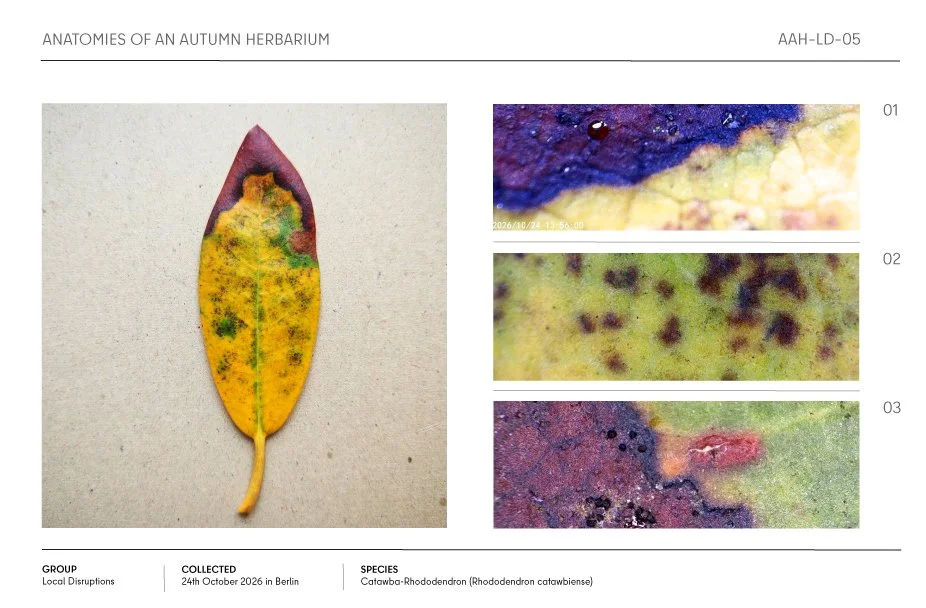
Spots, dark patches, pale deposits and small interruptions create distinct zones within the leaf surface. Each draws attention to a particular location where colour, texture or the continuity of the tissue differs from its surroundings. This chapter examines these irregularities through their shape, extent and edges, moving between their position on the whole leaf and their microscopic appearance. A small mark can become an extensive terrain under magnification, revealing further boundaries and variations within itself. 
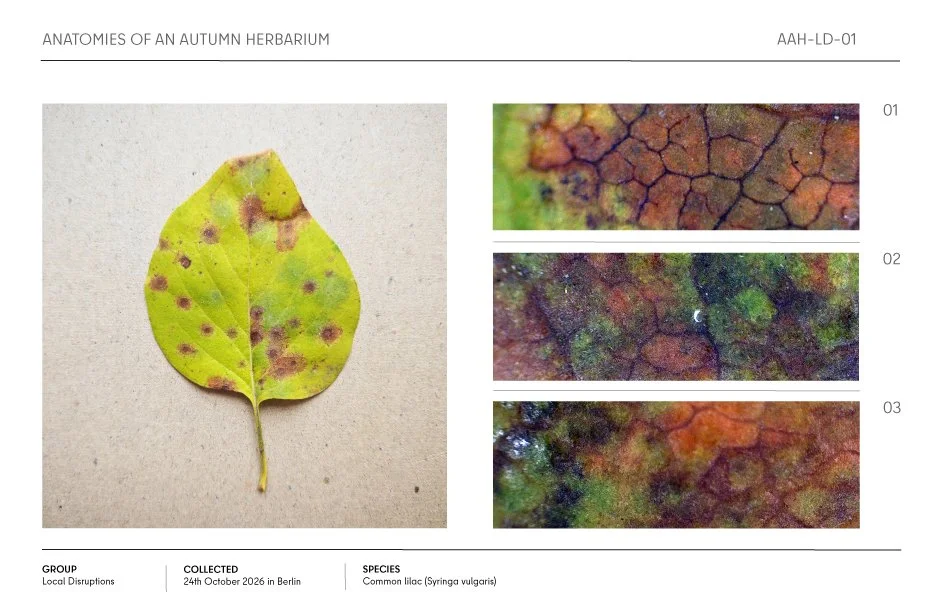
Autumn herbarium specimen of a yellow common lilac leaf with brown spots, shown alongside three microscopic close-ups of its textured surface.

Autumn herbarium specimen: a Catawba rhododendron leaf with green, burgundy, and purple discoloration, shown alongside three close-up texture details.

Autumn Norway maple leaf with white fungal growth, shown alongside three microscopic detail views of the leaf surface.

Autumn herbarium page featuring a yellow-orange rhododendron leaf and three microscopic views of its surface


Autumn herbarium plate featuring a yellow-speckled Catawba rhododendron leaf with three magnified color and texture details.

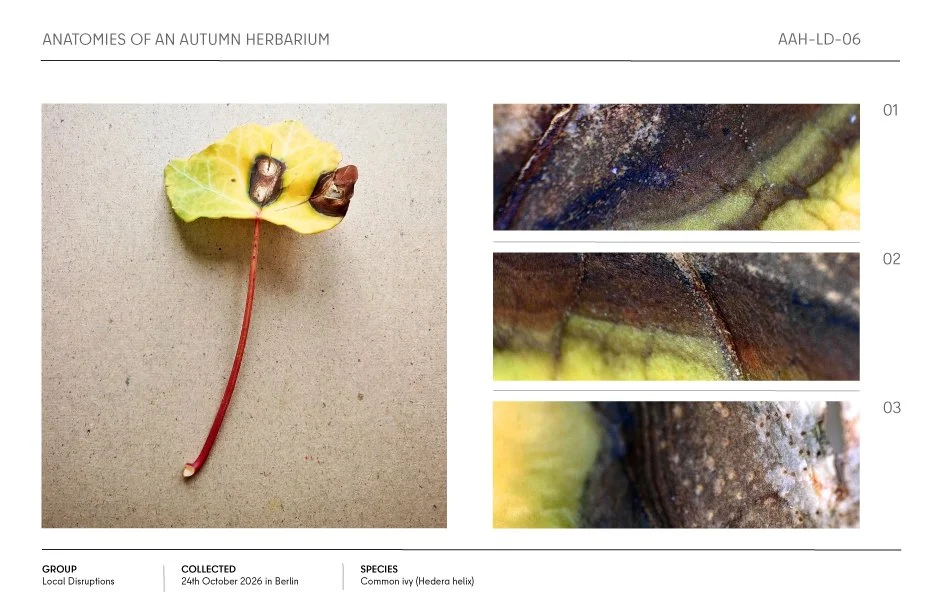
Autumn herbarium specimen of common ivy (Hedera helix) with a yellow leaf, dark berries, and red stem, shown with three macro detail images.

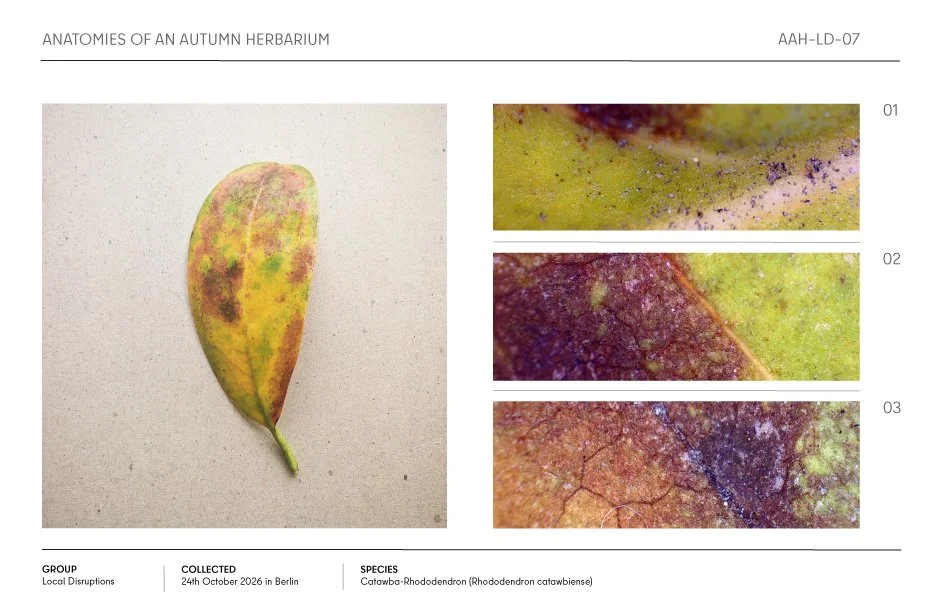
Autumn herbarium page featuring a pressed, mottled yellow-green and reddish rhododendron leaf with three detailed close-up views.

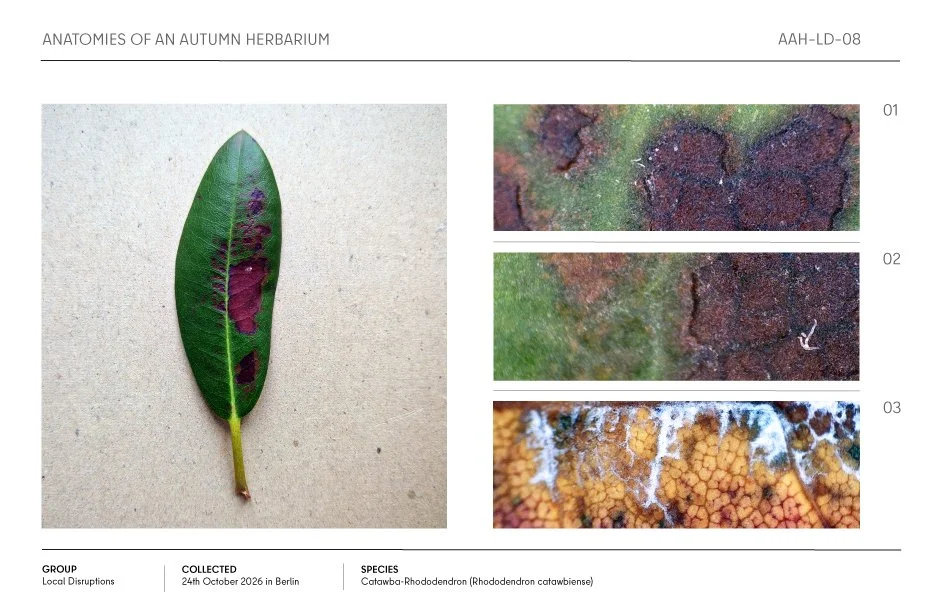
Annotated autumn herbarium sheet showing a Catawba rhododendron leaf with purple lesions and three magnified close-ups.

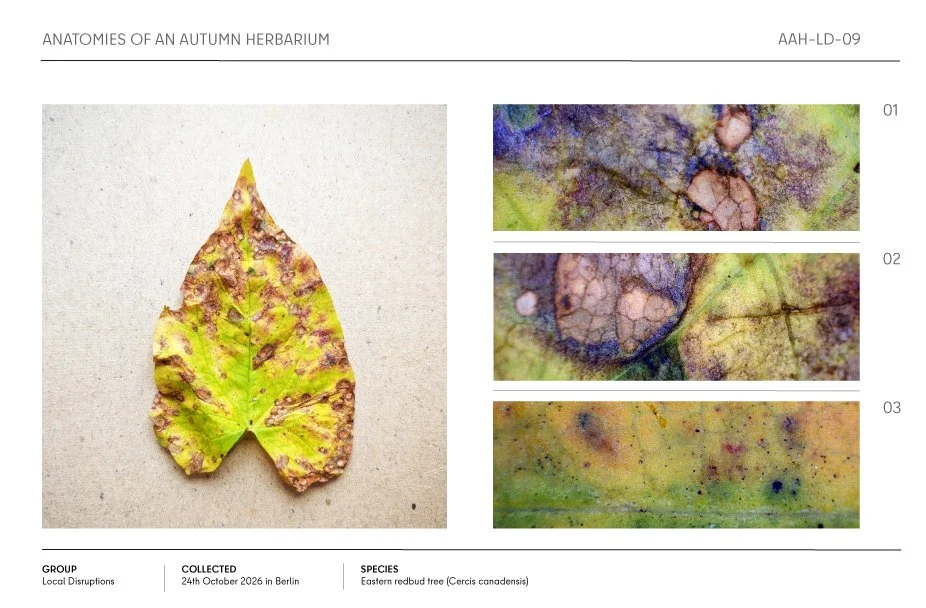
Autumn eastern redbud leaf herbarium specimen with close-up images of leaf discoloration and surface details

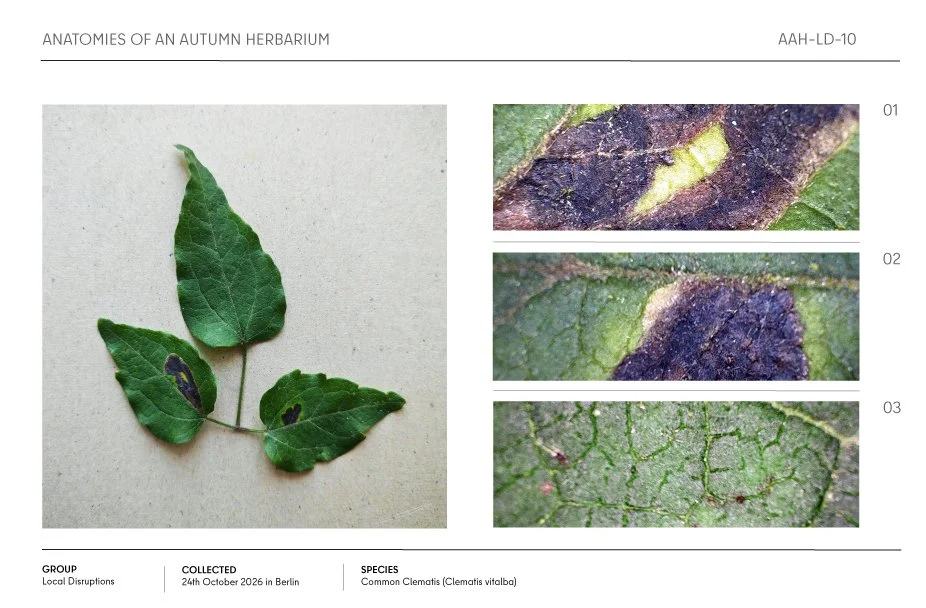
Herbarium sheet showing a common clematis leaf specimen with dark purple leaf spots and three close-up images of leaf damage, collected in Berlin.