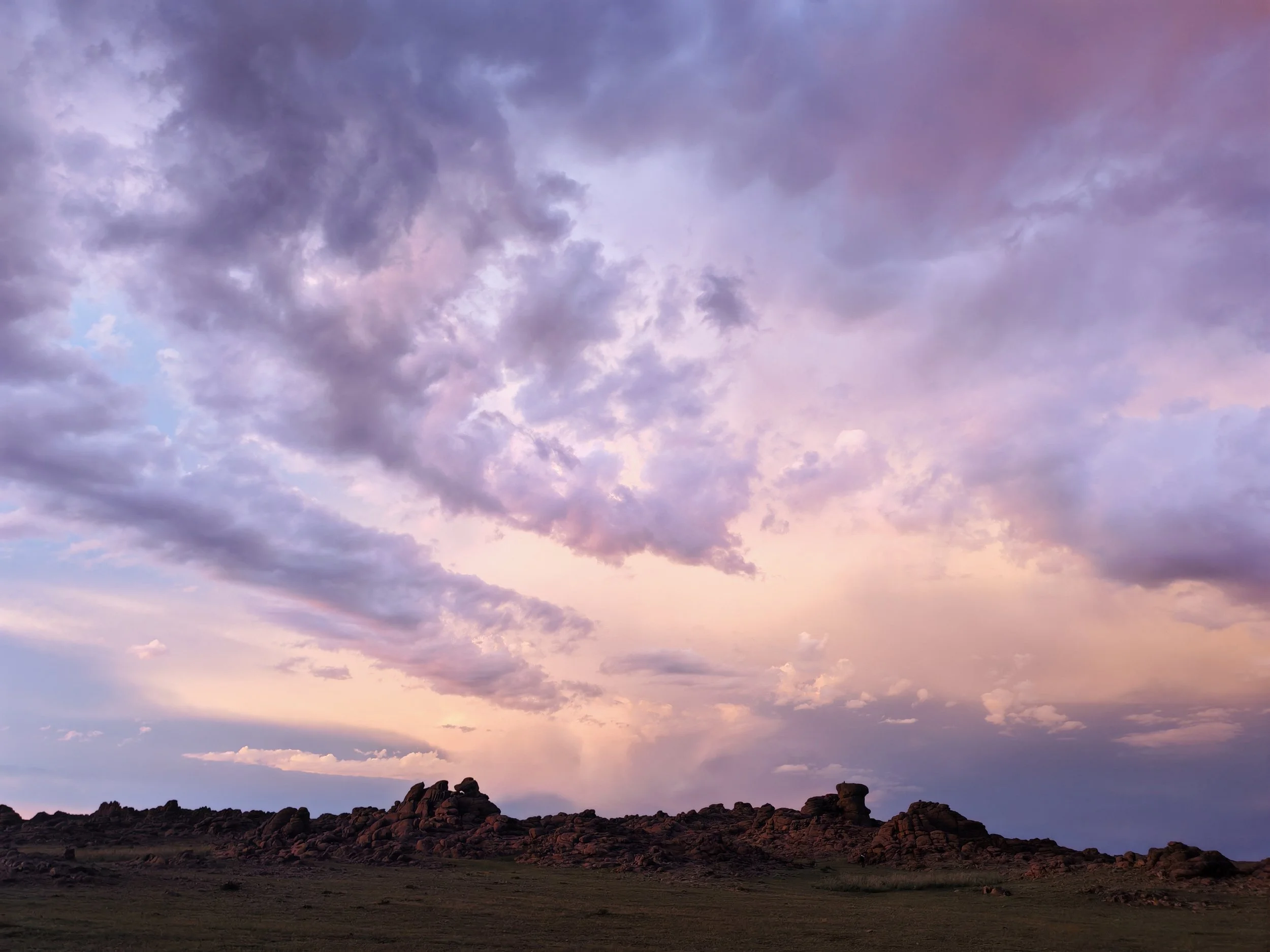
HYDROLOGICAL CIRCLES
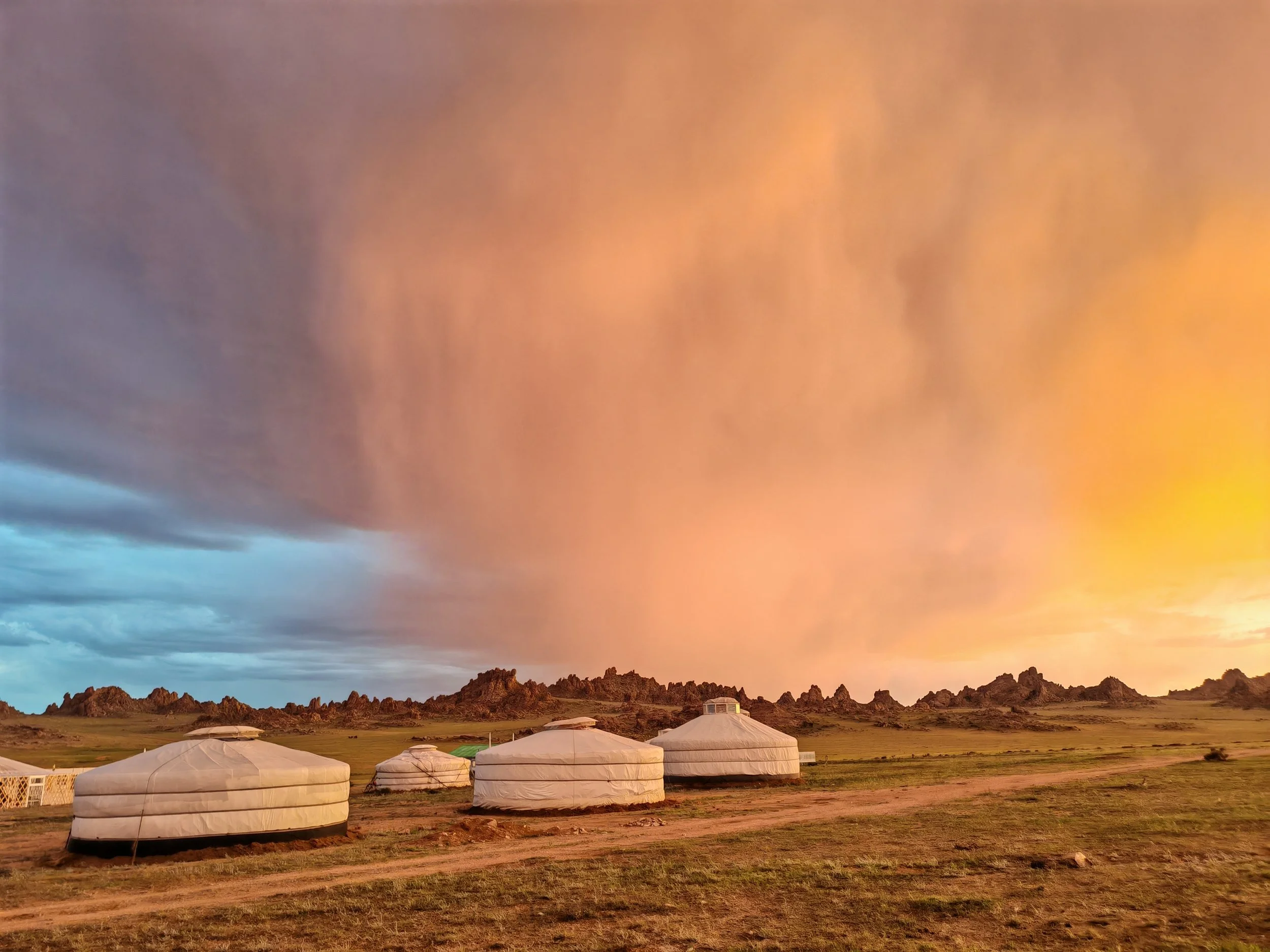
ARTISTIC RESEARCH IN MONGOLIA | 2026
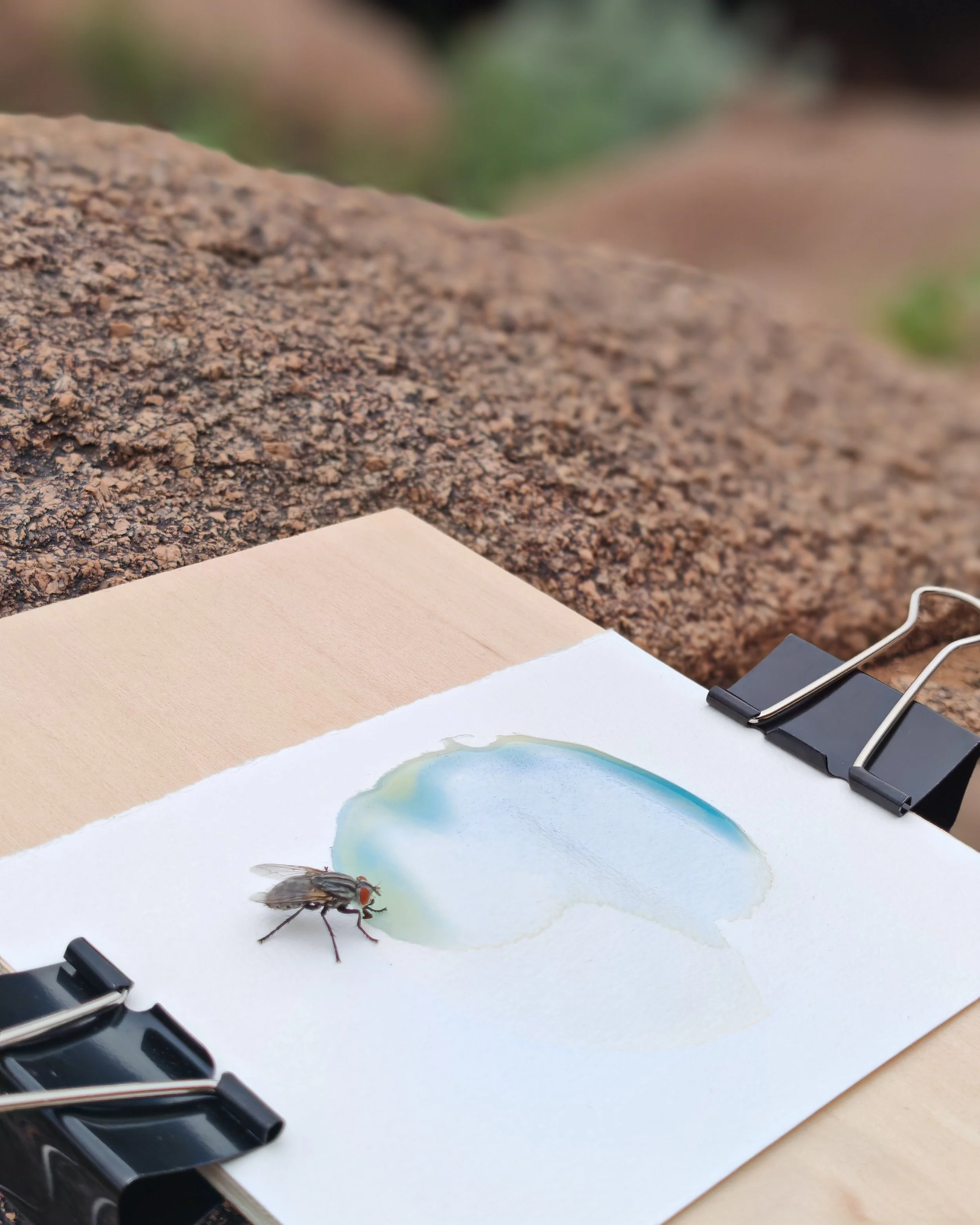
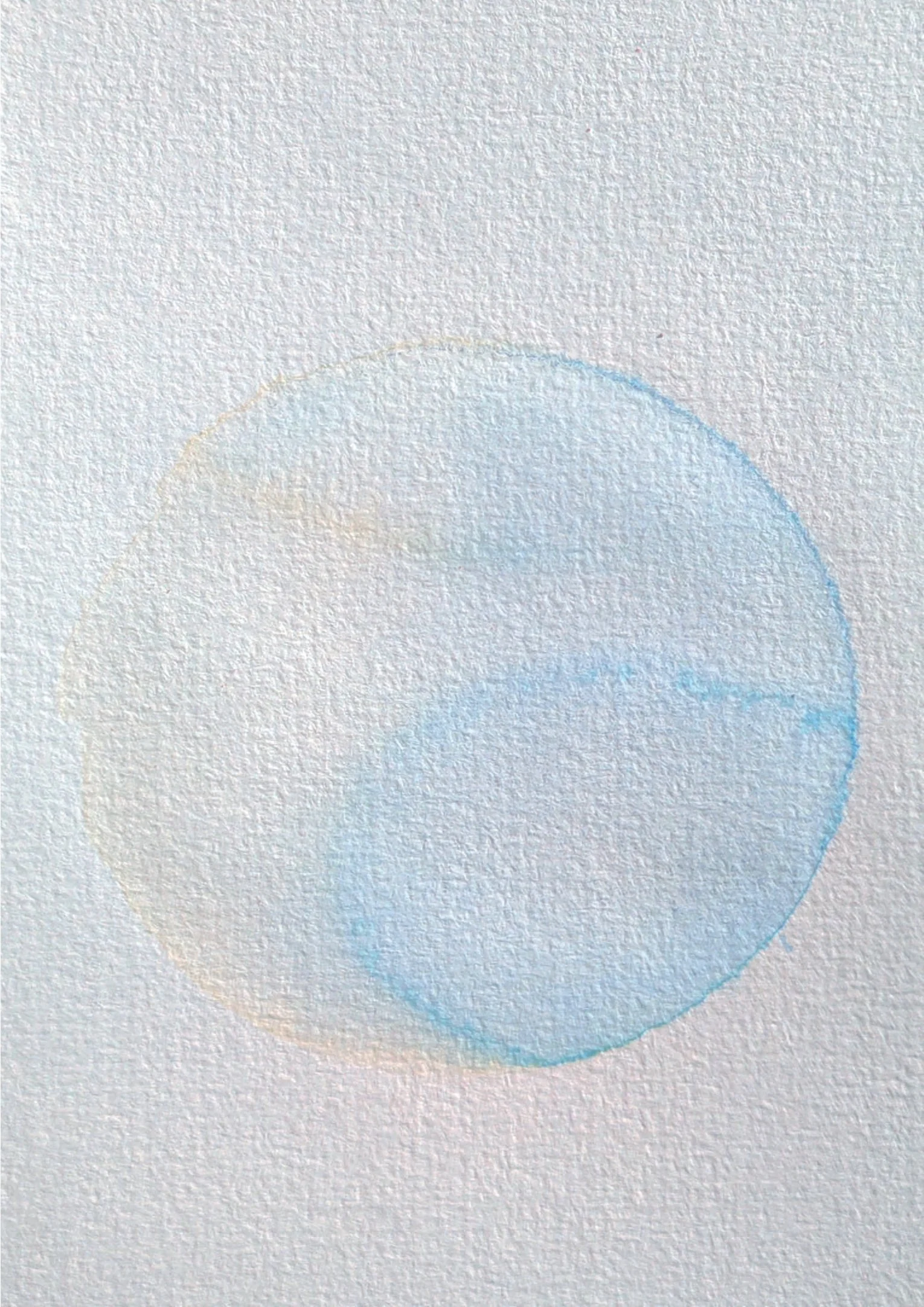
The series Hydrological Circles was developed during a residency in Mongolia as an artistic field study of water, time, climate and place. In a deliberately reduced experimental arrangement, defined quantities of pigmented water were applied to horizontally positioned, pre-moistened watercolour paper. Temperature, relative humidity, wind, light conditions, elevation and drying duration were documented.
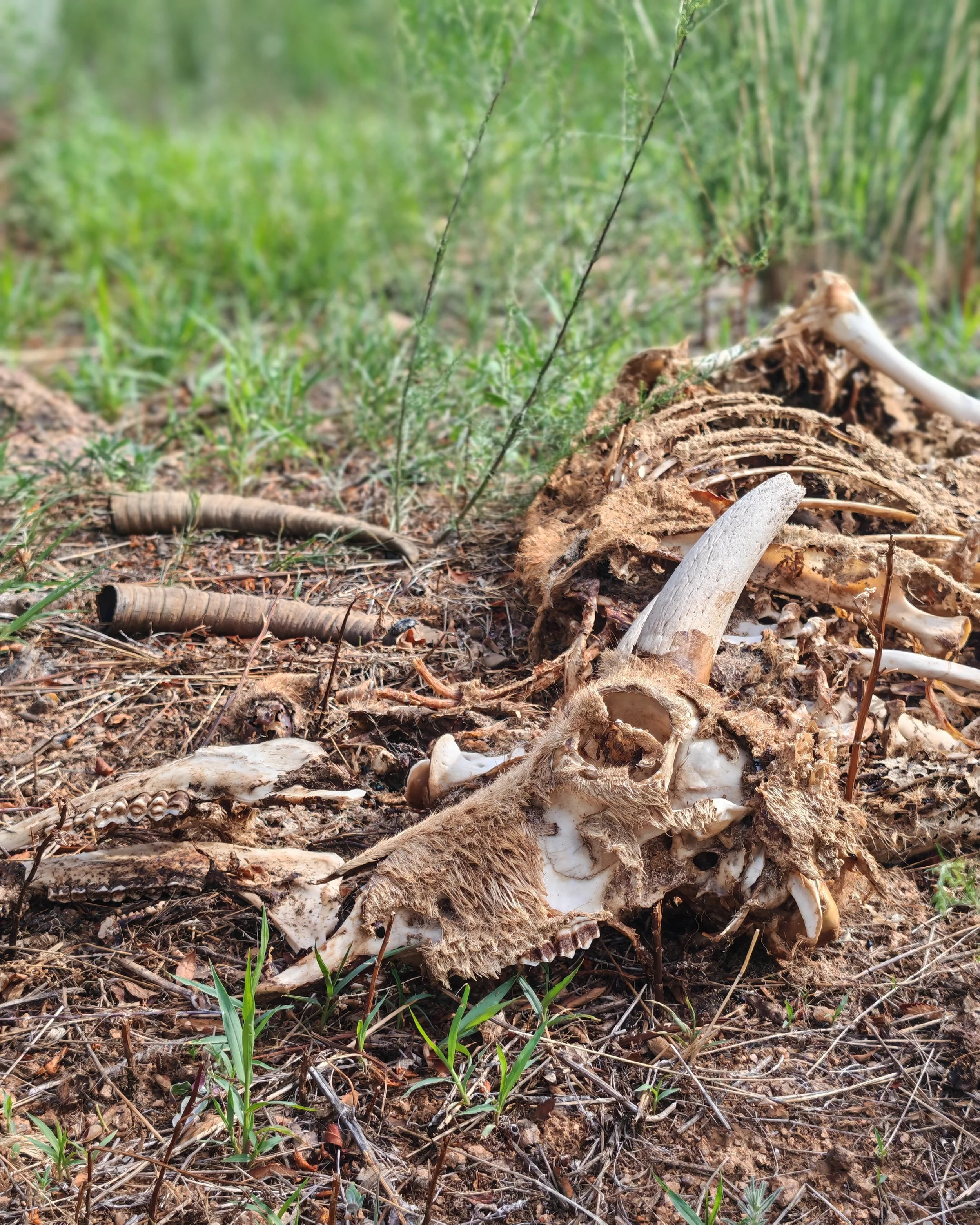
The Gobi Desert appears not as a motif but as a physical co-agent in the works: through heat, humidity, wind, light, rain, gravity, the absorption of the paper and non-human contact. For a limited time, each sheet holds a small body of water. Only through its movement and evaporation do pigment edges, deposits, deformations and overlays emerge. The circles are therefore images, events and material records at the same time. The series is complemented by field protocols, photographic and film documentation, cartographic locations and tabular analyses.
-
My particular thanks go to the entire team of the Nomadic Red Corner Residency Programme—especially its director, Gantuya Badamgarav, and Munkhdorj Batdelger. Taking part in the programme enabled me to encounter Mongolia with an intensity and openness that went far beyond an ordinary travel experience. The organisational support, the journeys together through different landscapes and the encounters with people on site created a framework in which personal experience, professional exchange and artistic work could be connected. I thank the team for their trust and for the freedom to develop an independent project from the experiences of the residency. The opportunity to observe, experiment and document over an extended period in Ikh Gazriin Chuluu was crucial to the creation of Hydrological Circles. Without the logistical support and precise knowledge of local conditions, this field study would not have been possible in its present form.
My heartfelt thanks also go to Foundation Berliner Leben for funding the journey. Its support enabled me to use the residency simultaneously as artistic research, curatorial professional development and international exchange. Encountering the working methods of another residency structure, local art and cultural contexts, and the perspectives of the participating artists and organisers provided important impulses for my own curatorial practice. These experiences inform not only this art project but also my continuing work with international residencies, artists and site-specific research formats.
The residency deepened questions about how artistic processes can be developed responsibly in unfamiliar cultural and geographical contexts, which conditions a productive residency requires, and how exchange can be shaped beyond short-term logics of presentation. In this way, the journey connected artistic work and curatorial reflection in ways that could not be fully planned in advance.
Openness to unexpected encounters, changes in weather, methodological adjustments and new questions constituted the particular value of the residency. I thank Foundation Berliner Leben for the trust that made this space for experience and research possible.
I also thank everyone who shared knowledge, time, hospitality and attention with me during the residency: the local hosts, drivers and guides, and the other participants in the residency programme—especially Catherine Kueffer Blumenkamp, Paulina Karczewska and Eya Ganbat. Many of their contributions are not directly visible in the finished works. Nevertheless, they are part of the conditions from which the project emerged. Hydrological Circles began with an individual artistic question, but became possible only through an extensive network of support, trust, care and exchange.
Ulaanbaatar, 27 July 2026