CHAPTER 4: Reaching Resources
Hier fehlt eine Einführung
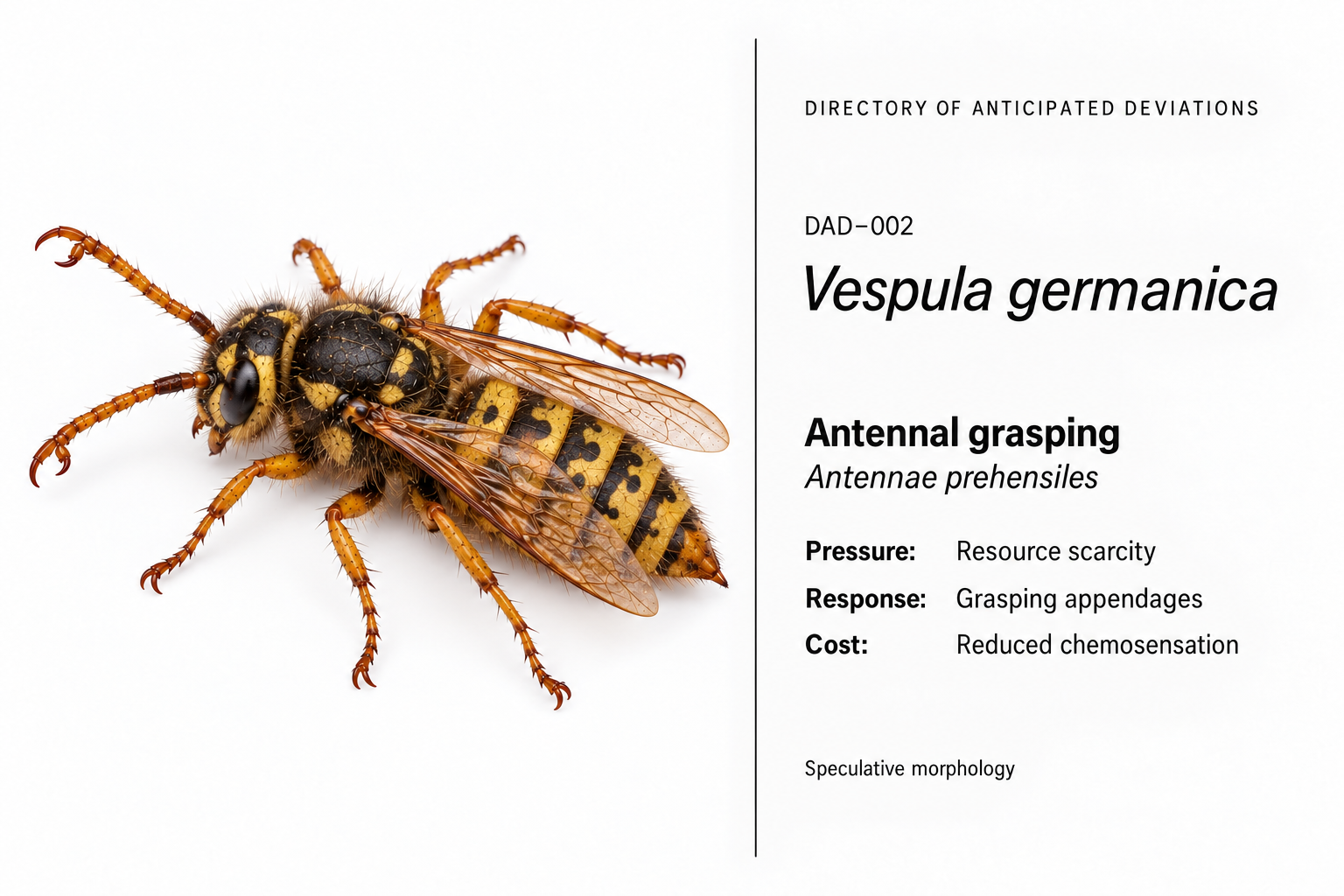
DAD-012 (02)
The Gripper
(Antennae prehensiles)
Description
Recurring droughts have made soft plant fibers and readily accessible food scarce. Usable material lies deep within cracks, beneath dry crusts, and between hardened layers. It is in this environment that the Gripper appears: its antennae have evolved into powerful, segmented tools. Unevenly curved terminal segments grasp, pry, and pull, while the six original legs support the body. The head gains its own working space. What once merely felt out the environment can now open it up. Within the developmental narrative described here, this new capacity for action provides access to resources that remain inaccessible to other bodies.
Scientific Context
The transformation of antennae into leg-like structures is one of the most striking findings in developmental genetics. In Drosophila, changes in the activity of the Hox gene Antennapedia can alter the identity of a body appendage. Studies show how closely antenna and leg development are linked and how crucial spatial and temporal gene regulation is.¹ ² ³ These studies provide no evidence for drought-induced grasping antennae or their utility in wasps. The proposal combines the proven malleability of the body plan with a hypothetical scenario of natural selection. The cost of this transformation is loss: where a tool emerges, a part of the original sensory organ disappears. The grasping tip achieves more—yet at the same time may perceive less of what it reaches.
¹ B. S. Emerald und S. M. Cohen, ‘Spatial and temporal regulation of the homeotic selector gene Antennapedia is required for the establishment of leg identity in Drosophila’, Developmental Biology (2004). https://pubmed.ncbi.nlm.nih.gov/15013806/
² M. Cummins et al., ‘Comparative analysis of leg and antenna development in wild-type and homeotic Drosophila melanogaster’, Development Genes and Evolution (2003). https://pubmed.ncbi.nlm.nih.gov/12768424/
³ F. Casares und R. S. Mann, ‘Control of antennal versus leg development in Drosophila’, Nature, 392 (1998), S. 723–726. https://www.nature.com/articles/33706
DAD-013 (08)
The Dew Harvesters
(Setae aquiferae)
Description
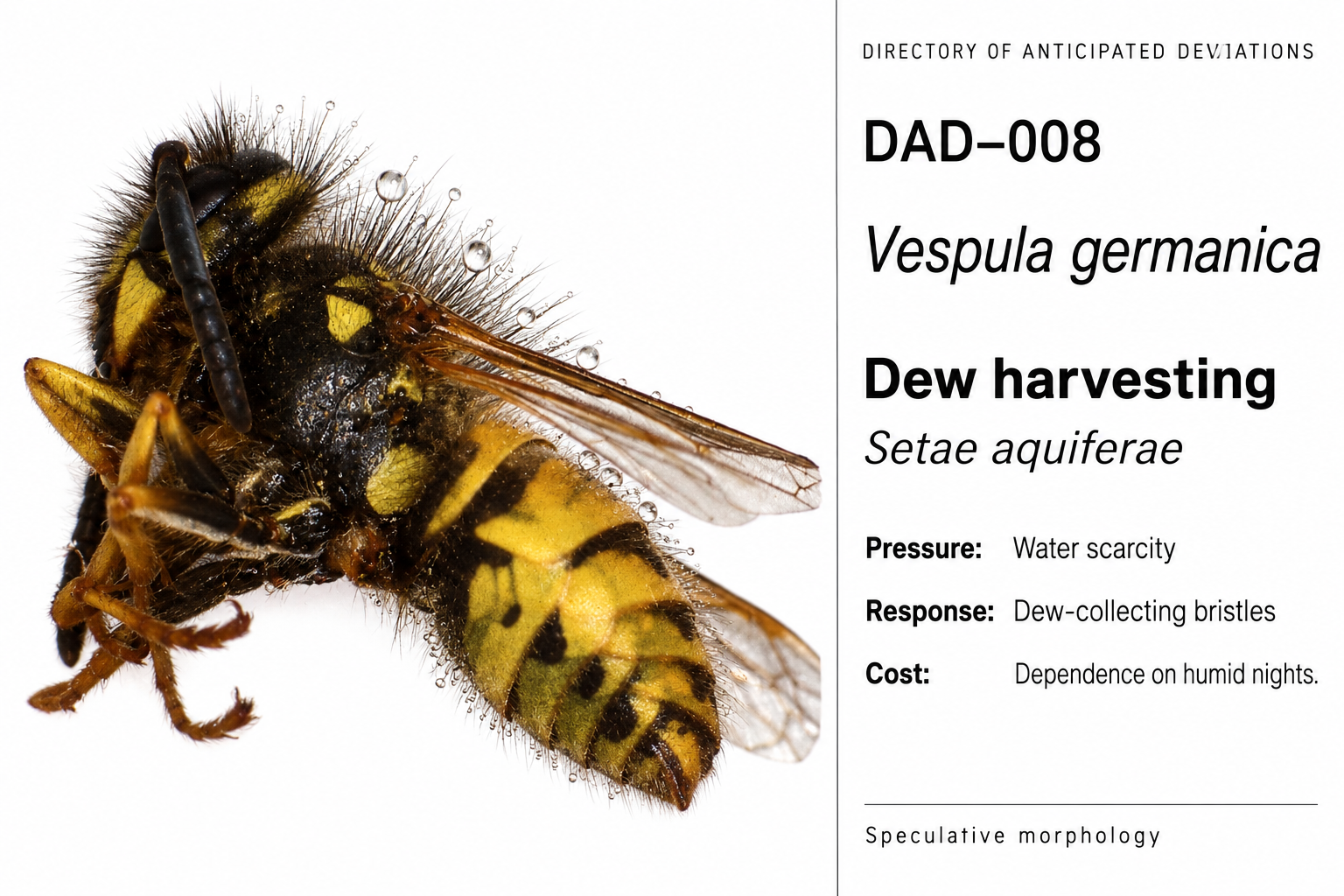
An irregular fringe of elongated bristles rises above the head, thorax, and abdomen of the dew harvesters. Individual water droplets hang between these fine structures, focusing the light and causing the dark body surface to glow in places. Prolonged dry spells and the disappearance of reliable water sources constitute the environmental pressures faced by this species. Their bristles serve as collection surfaces during the brief humid hours of the day: when the surface cools below the dew point, water can condense. Larger droplets merge between adjacent bristles; accessible accumulations are scraped off with the legs and guided to the mouthparts. The body taps into a fleeting water source, drop by drop.
Scientific Context
Certain beetles in the Namib Desert, located on the southwestern coast of Africa, obtain drinking water from fog. They orient their bodies toward the moist wind and assume a posture that allows the collected droplets to flow toward their mouths.¹ Comparative experiments show how crucial the conveyance of water is, in addition to its collection; flow simulations further illustrate the influence of body posture on yield.² ³ Fog collection captures droplets already in the air, whereas dew only forms on a sufficiently cooled surface. Both methods tie access to water to a close interplay between the body and the weather. The dew-combing beetle visibly bears this dependence on its back. Its bristles can hold water, but they cannot create the conditions for its formation. If the nights remain too dry or the body does not cool sufficiently, the collection apparatus remains empty.
¹ T. Nørgaard und M. Dacke, ‘Fog-basking behaviour and water collection efficiency in Namib Desert Darkling beetles’, Frontiers in Zoology, 7 (2010), 23. https://doi.org/10.1186/1742-9994-7-23
² T. Nørgaard, M. Ebner und M. Dacke, ‘Animal or Plant: Which Is the Better Fog Water Collector?’, PLOS ONE, 7 (2012), e34603. https://doi.org/10.1371/journal.pone.0034603
³ U. Chakrabarti et al., ‘Importance of Body Stance in Fog Droplet Collection by the Namib Desert Beetle’, Biomimetics, 4 (2019), 59. https://doi.org/10.3390/biomimetics4030059
DAD-014 (12)
The Breaker
(Mandibulae robustae)
Description
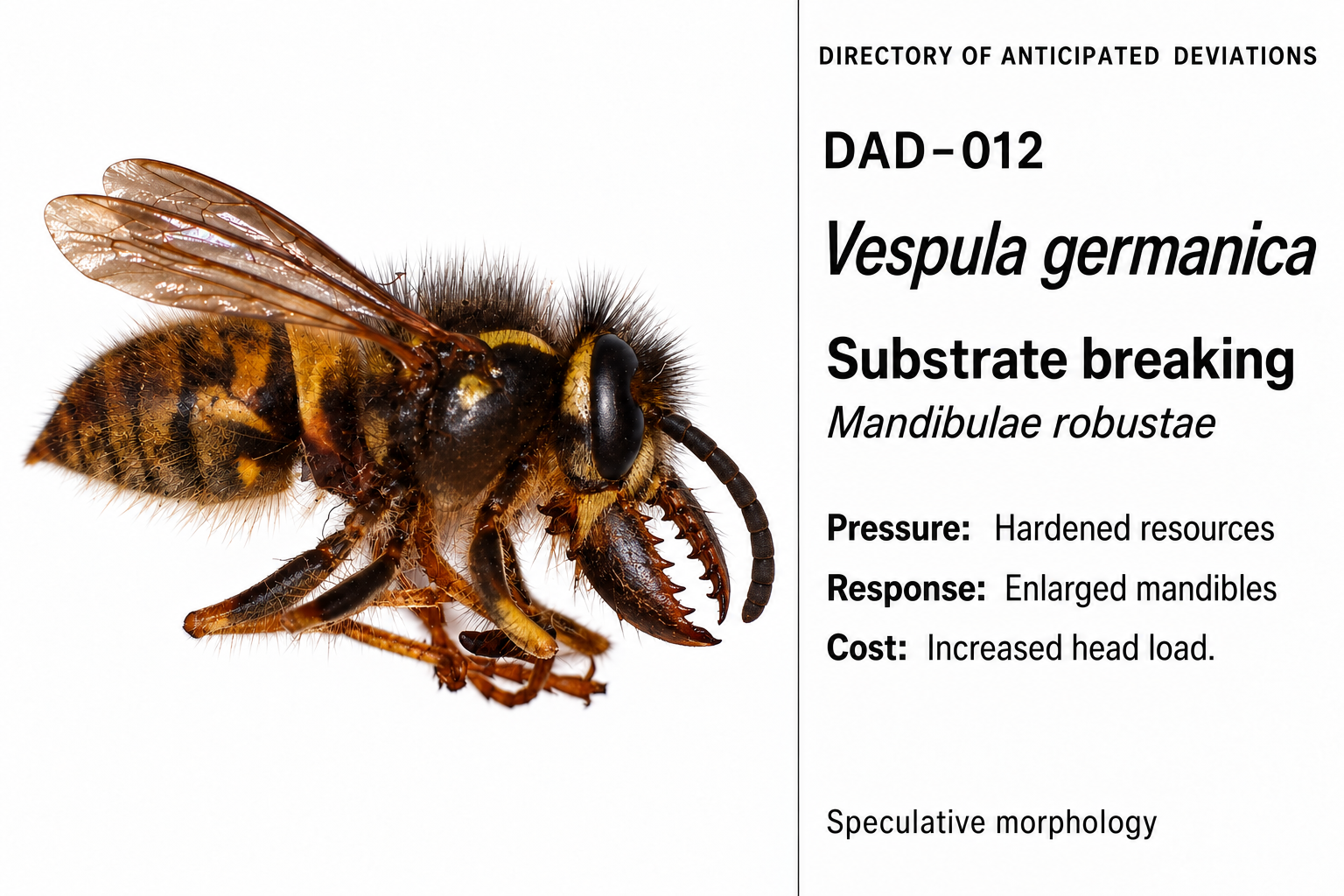
The head becomes the center of power. Two short, massive mandibles with widened bases and powerful inner teeth define its form. Behind them, the enlarged head capsule creates space for stronger closing muscles. The environmental pressure driving this design stems from the scarcity of easily removable wood fibers: In a tidied-up, sealed landscape, weathering wood surfaces disappear, while harder materials remain. The breaker taps into this stubborn residue. Her mouthparts grip, notch, and extract fibers from surfaces where other workers fail. Nest-building begins with a forceful intervention into the material; resistance is transformed back into a habitable space.
Scientific Context
The mouthparts of Vespula germanica already combine material collection, prey processing, and brood care.¹ Studies of other invertebrates demonstrate just how effective such tools can become: structures rich in zinc and manganese enable hard, wear-resistant cutting edges; in addition to size, the texture of their contact surfaces is also crucial. ² In leaf-cutting ants, wear on the mandibles even alters the division of labor: ants with worn cutting edges cut more slowly and more frequently take on transport duties. ³ For the nest builders, this spells a precarious future. A colony whose building material can be harvested by only a few specialized workers depends on the condition of their tools. With each cutting edge that becomes blunter, the ability to expand the nest or repair damage could diminish.
¹ B. Baranek, K. Kuba, J. Bauder, and H. Krenn, “Mouthpart dimorphism in male and female wasps of Vespula vulgaris and Vespula germanica (Vespidae, Hymenoptera),” Deutsche Entomologische Zeitschrift, 65, No. 1 (2018), pp. 65–74. https://doi.org/10.3897/dez.65.23593
² R. M. S. Schofield et al., “The homogeneous alternative to biomineralization: Zn- and Mn-rich materials enable sharp organismal ‘tools’ that reduce force requirements,” Scientific Reports, 11 (2021), Article 17481. https://doi.org/10.1038/s41598-021-91795-y
³ R. M. S. Schofield, K. D. Emmett, J. C. Niedbala, and M. H. Nesson, “Leaf-cutter ants with worn mandibles cut half as fast, spend twice the energy, and tend to carry instead of cut,” Behavioral Ecology and Sociobiology, 65 (2011), pp. 969–982. https://doi.org/10.1007/s00265-010-1098-6
DAD-015 (13)
The Long-Tongued Wasp
(Partes oris elongatae)
Description
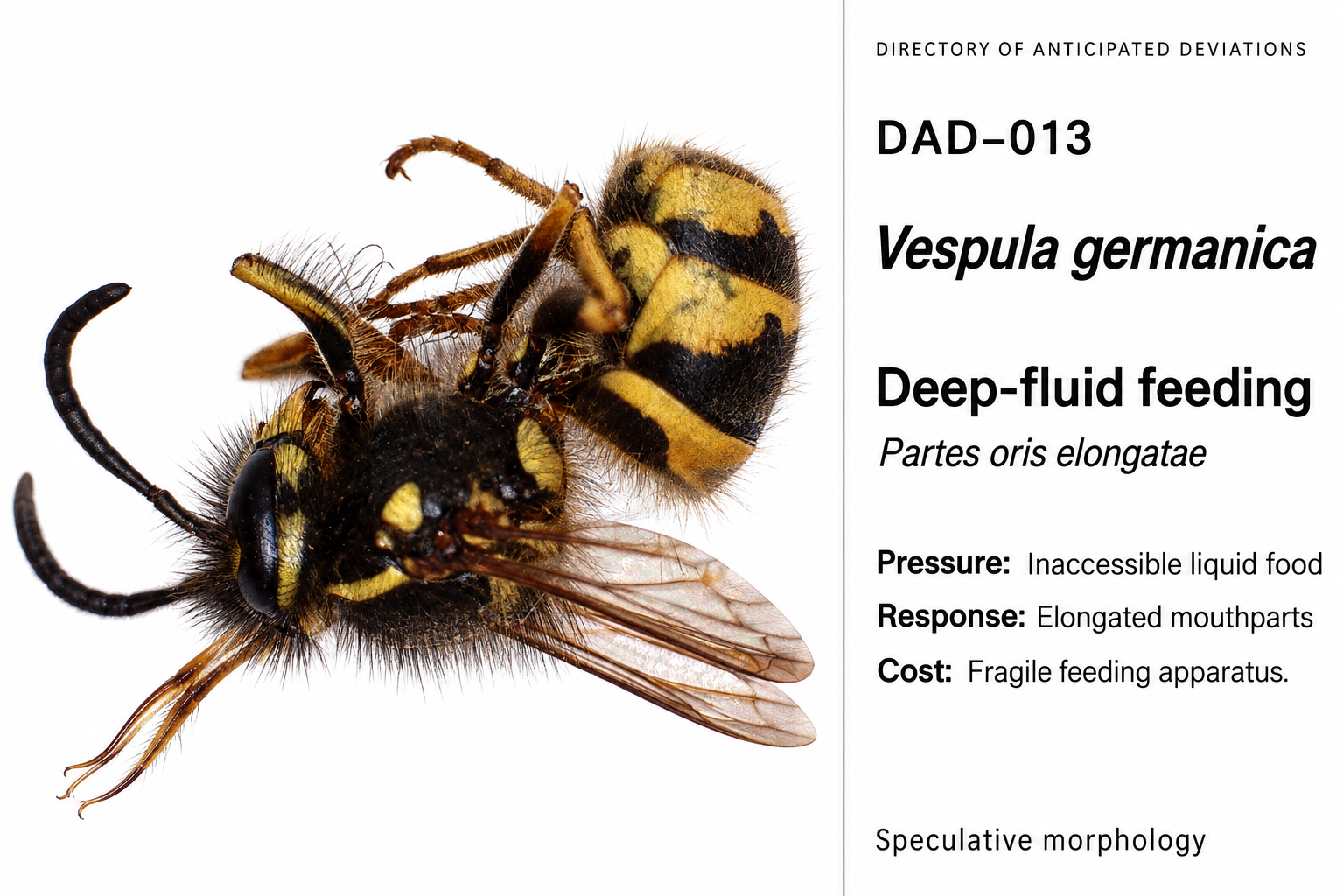
Below the head, a slender, widely extending mouthpart unfolds. The elongated portions of the lower lip and maxillae together form a movable apparatus for taking in liquids; the lateral mandibles remain intact. The environmental pressure driving this design is a changing foraging landscape: Recurring dry spells and intensive land management are causing a decline in easily accessible flower resources. Where deep-calyx plants remain as reliable sources of nectar, an extended reach provides an advantage. The Long-Reaching Forager reaches food behind narrow flower openings without having to force its head inside. Her body opens up a new spatial dimension of foraging: depth becomes a storage space.
Scientific Context
The German wasp already possesses an apparatus for fluid intake formed by several mouthparts, whose bristles and internal structures filter food particles.¹ South African Prosoeca flies demonstrate just how far this extension can go: their extremely long mouthparts allow them to access nectar in deep flower tubes. ² However, the relationship between body structure and food availability can also be reversed. A study spanning four decades documented shorter tongues in two alpine bumblebee species; the researchers linked this development to the decline in flower availability during warmer summers and a more diverse foraging behavior. ³ For long-range feeders, the danger therefore lies in the permanence of their specialization. If the plants whose nectar they can now reach disappear, their elaborately elongated anatomy remains. A body may still be tailored to a food source that has long since ceased to exist.
¹ K. Kuba et al., “Filtration of Nutritional Fluids in the German Wasp Vespula germanica (Vespidae, Hymenoptera),” Insects, 13, No. 2 (2022), Article 185. https://doi.org/10.3390/insects13020185
² F. Karolyi, N. U. Szucsich, J. F. Colville, and H. W. Krenn, “Adaptations for nectar-feeding in the mouthparts of long-proboscid flies (Nemestrinidae: Prosoeca),” Biological Journal of the Linnean Society, 107, No. 2 (2012), pp. 414–424. https://doi.org/10.1111/j.1095-8312.2012.01945.x
³ N. E. Miller-Struttmann et al., “Functional mismatch in a bumblebee pollination mutualism under climate change,” Science, 349, No. 6255 (2015), pp. 1541–1544. https://doi.org/10.1126/science.aab0868
DAD-016 Die Zwergarbeiterin
DAD-017 Die Zisterne
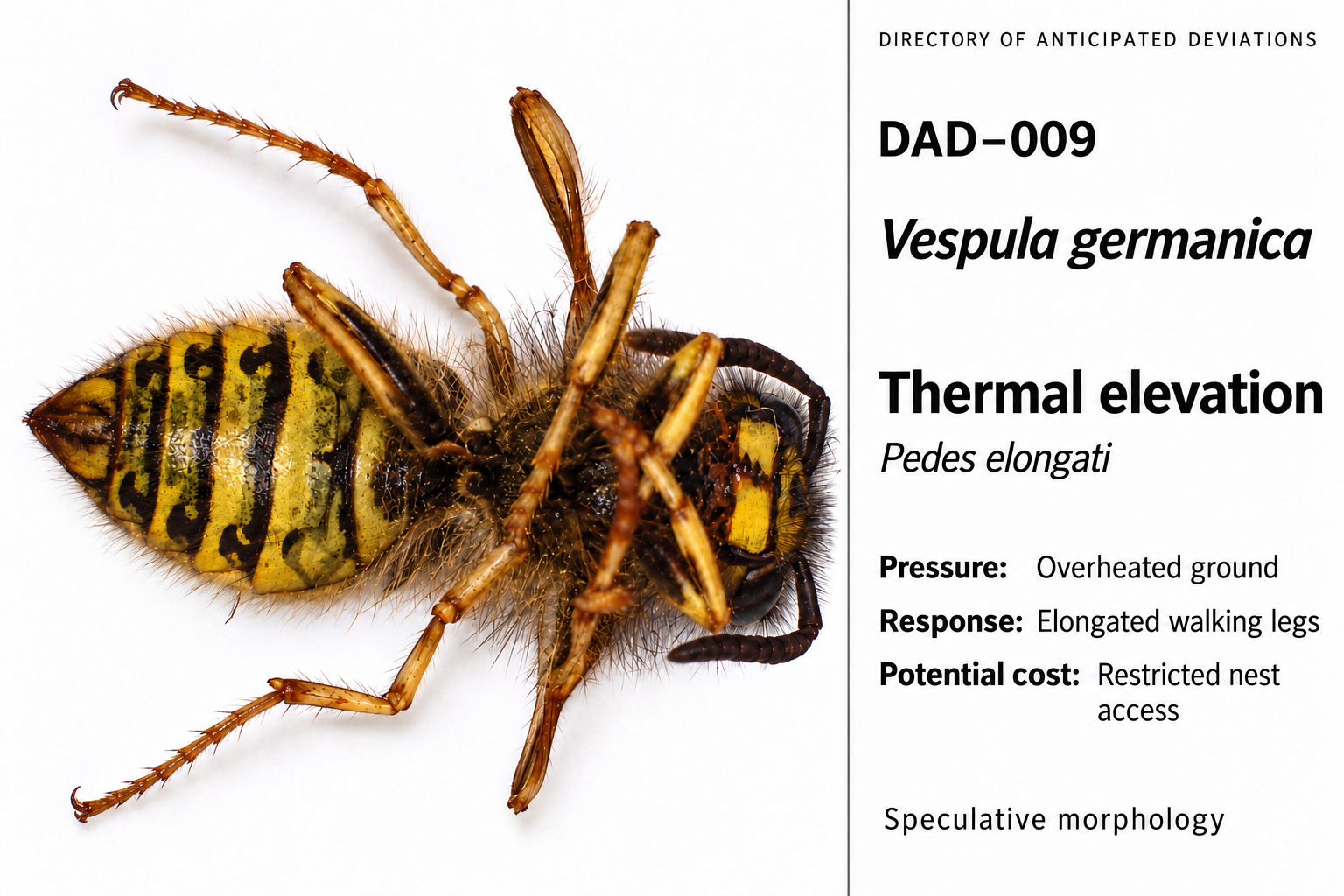
DAD-009
The Stilt-Walker
(Pedes elongati)
Description
The legs of the Stilt-Walker extend far beyond the familiar outline of its body. Elongated limbs form narrow, jointed arches; the small claws remain intact at their ends. When the body is at rest, these struts lie side by side, folded unevenly and stretched out. Their potential benefit becomes apparent when walking: a carefully coordinated leg posture lifts the thorax and abdomen further off the ground. Highly heated, unshaded ground surfaces provide the environmental pressure that shapes this form. An additional gap is created between the body and the surface, which can already provide access to a different thermal environment near the ground. The wasp carries the possibility of a small refuge within the length of its limbs.
Scientific Context
Heat-loving desert ants of the genera Cataglyphis and Ocymyrmex have particularly long legs that can lift their bodies into cooler layers of air above the hot ground.¹ Studies of their locomotion also show how closely leg length, stride sequence, and ground contact interact; particularly high speeds can be achieved even with comparatively shorter legs and higher stride frequencies.² ³ In the case of the “stilt-walker,” this elongation also alters the relationship to its own nest. When passing through narrow passages, turning between the honeycombs, and working on the cell edges, the legs must be tucked in and repositioned. If larger distances between honeycombs and wider entrances become necessary, the colony’s space requirements increase. If the nest architecture remains unchanged, certain construction and maintenance tasks could increasingly fall to the shorter-legged workers. The long-legged worker gains distance from the hot ground but at the same time risks losing access to parts of her own nest.
¹ S. Sommer und R. Wehner, ‘Leg allometry in ants: Extreme long-leggedness in thermophilic species’, Arthropod Structure & Development (2012). https://pubmed.ncbi.nlm.nih.gov/21992805/
² ‘Walking and running in the desert ant Cataglyphis fortis’, Journal of Comparative Physiology A (2015). https://doi.org/10.1007/s00359-015-0999-2
³ ‘High-speed locomotion in the Saharan silver ant, Cataglyphis bombycina’, Journal of Experimental Biology, 222 (2019), jeb198705. https://pubmed.ncbi.nlm.nih.gov/31619540/
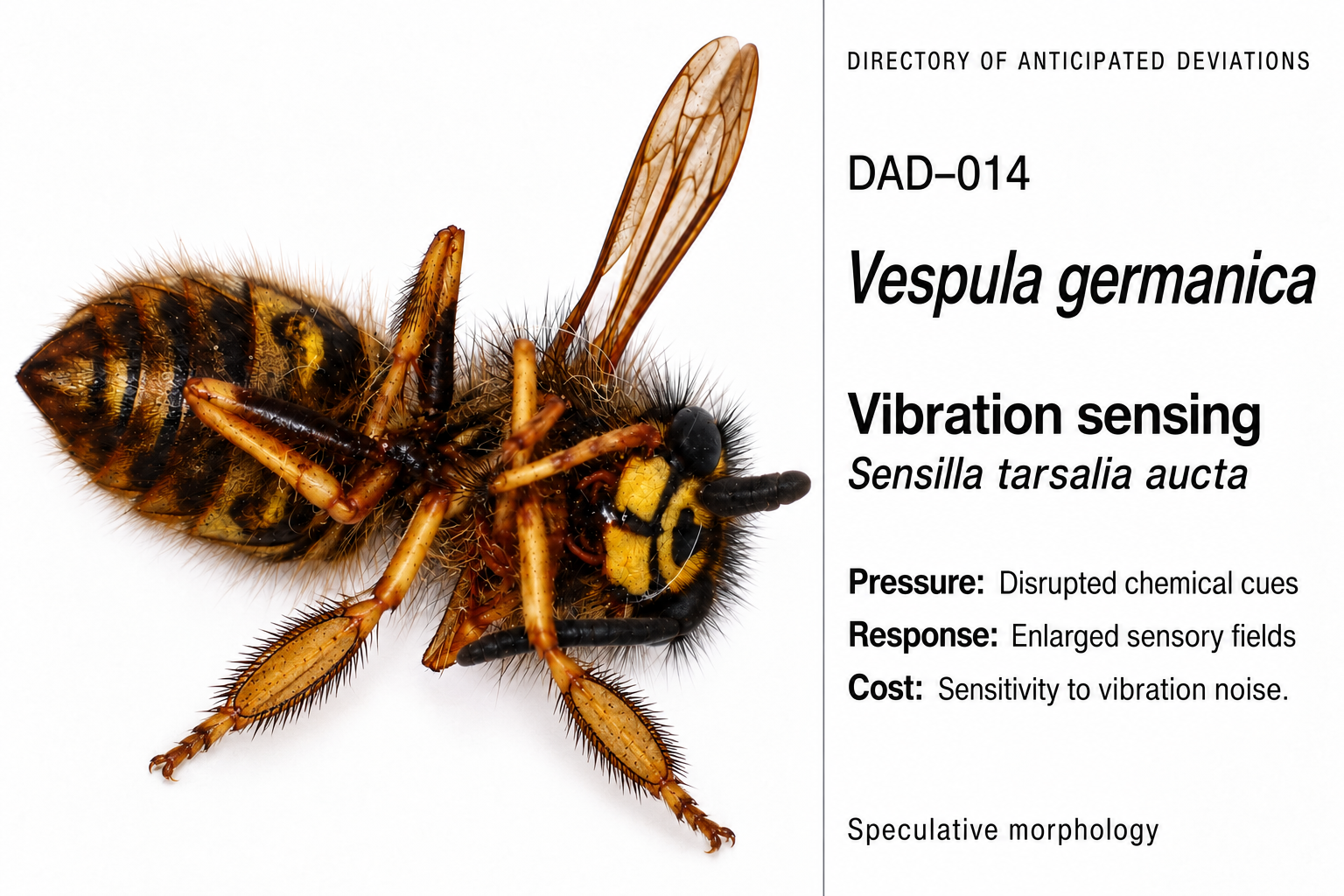
DAD-014
Vibration Reader
(SENSILLA TARSALIA AUCTA)
Description
The legs become instruments of perception that function without light. Widened foot segments establish contact with the ground; enlarged mechanosensory organs are embedded in the reinforced rails. The Vibration Reader pauses, spreads its legs across the surface, and detects the faintest vibrations traveling through wood, plant stems, or nest walls. The environmental pressure in this design is sustained daytime heat, which shifts activity into twilight and into sheltered, dark cavities. Where visual orientation reaches its limits, the movement of the material takes on greater significance. A hidden rustling, a touch on the nest shell, the footsteps of another worker: the ground becomes a conduit for messages. The world extends beyond what is visible.
Scientific Context
Some parasitoid wasps locate hidden hosts using substrate vibrations they generate themselves. Subgenual organs inside the tibiae are involved in this perception; conspicuous external hair fields alone do not explain this ability.¹ Experiments with Pimpla turionellae also show that ambient temperature influences the activity and success of this mechanosensory search. ² However, sensitive perception remains dependent on distinguishable signals: In the green stink bug Nezara viridula, experimentally generated interference vibrations impaired the detection and localization of mating signals—even outside their actual frequency range.³ For the vibration-detecting insect, any additional contact with the environment could thus also introduce a new source of interference. Traffic, machinery, and construction work would intrude upon her perception precisely where she seeks shelter. The nest would remain dark, but it would no longer be a place of peace.
¹ G. R. Broad and D. L. J. Quicke, “The adaptive significance of host location by vibrational sounding in parasitoid wasps,” Proceedings of the Royal Society B: Biological Sciences, 267, No. 1460 (2000), pp. 2403–2409. https://doi.org/10.1098/rspb.2000.1298
² J. Samietz, S. Kroder, D. Schneider, and S. Dorn, “Ambient temperature affects mechanosensory host location in a parasitic wasp,” Journal of Comparative Physiology A, 192 (2006), pp. 151–157. https://doi.org/10.1007/s00359-005-0057-6
³ R. Janža, N. Stritih-Peljhan, A. Škorjanc, J. Polajnar, and M. Virant-Doberlet, “Vibrational noise disrupts Nezara viridula communication, irrespective of spectral overlap,” Communications Biology, 7 (2024), Article 1533. https://doi.org/10.1038/s42003-024-07185-3
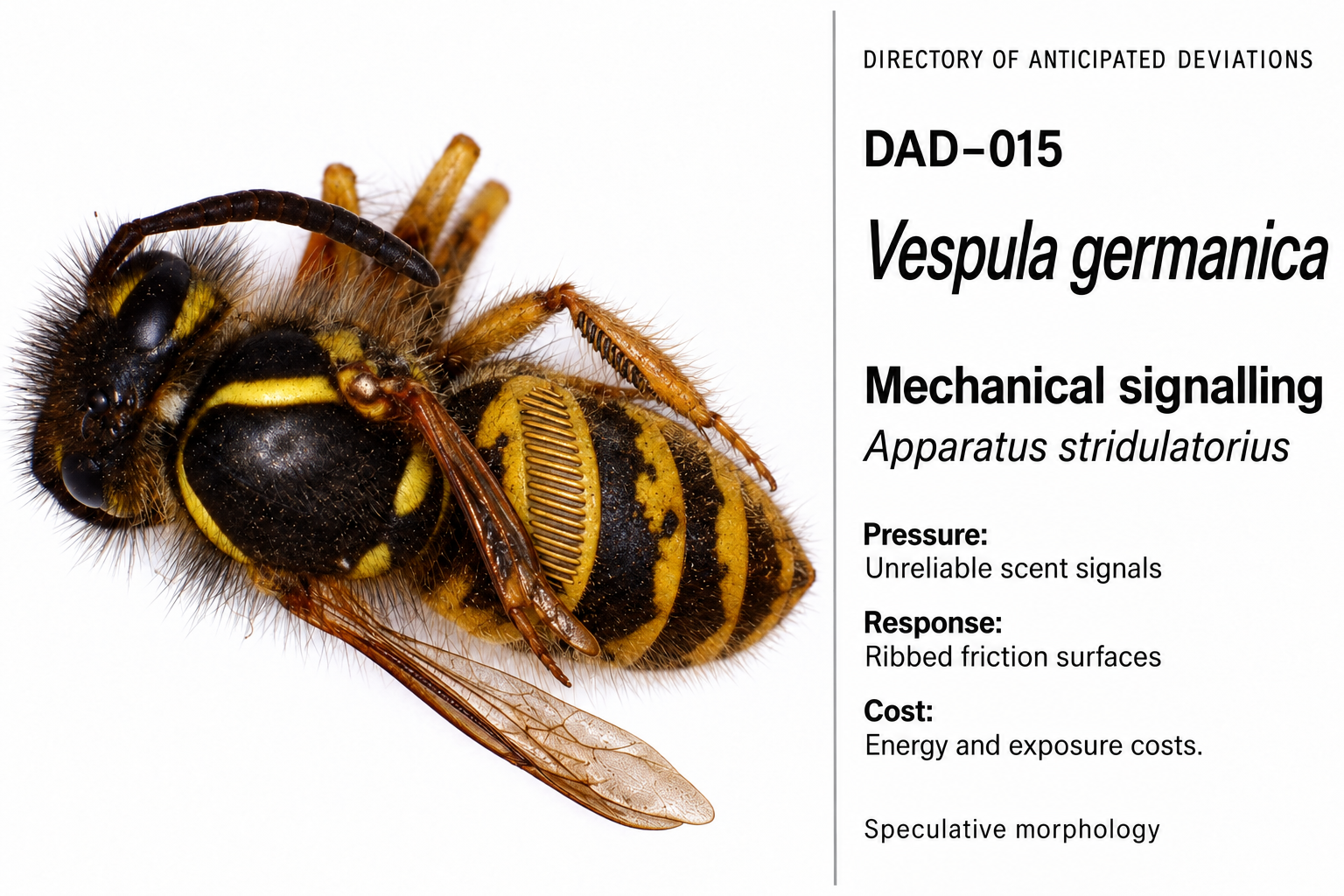
DAD-015
The Rasping One
(Apparatus stridulatorius)
Description
A finely ribbed surface forms at the junction of two abdominal segments. A hardened edge of the adjacent segment strokes across it as soon as the abdomen moves: the body becomes an instrument. Short, rhythmic impulses are transmitted through the outstretched legs into the nest structure. The environmental pressure driving this design is the increasing daytime heat, which prolongs stays in the sheltered nest and intensifies the shared use of limited retreat spaces. Amid densely packed bodies and winding honeycombs, the “Rasping One” supplements chemical and tactile communication with mechanical signals. She can attract attention without directly touching another worker. The paper walls become a medium of transmission; a small movement generates a message that extends beyond her own body.
Scientific Context
In leafcutter ants, substrate vibrations generated by stridulation serve to recruit nestmates in the immediate vicinity.¹ In Myrmica ants, auditory signals can also convey social status: the sounds produced by queens trigger special attention from workers—an effect that certain butterfly larvae and pupae exploit by mimicking these sounds. ² At the same time, experiments with Nezara viridula show how disruptive vibrations can impair the detection and localization of social signals.³ For leaf-cutting ants, this creates a delicate balance between communication and interference. What allows a single worker to be heard could cause signals to overlap when many ants are transmitting simultaneously. Traffic and machinery would introduce additional vibrations. The colony could generate more and more messages yet be able to reliably distinguish fewer and fewer of them.
¹ F. Roces and B. Hölldobler, “Use of stridulation in foraging leaf-cutting ants: Mechanical support during cutting or short-range recruitment signal?”, Behavioral Ecology and Sociobiology, 39, No. 5 (1996), pp. 293–299. https://doi.org/10.1007/s002650050292
² F. Barbero, J. A. Thomas, S. Bonelli, E. Balletto, and K. Schönrogge, “Queen ants make distinctive sounds that are mimicked by a butterfly social parasite,” Science, 323, No. 5915 (2009), pp. 782–785. https://doi.org/10.1126/science.1163583
³ R. Janža, N. Stritih-Peljhan, A. Škorjanc, J. Polajnar, and M. Virant-Doberlet, “Vibrational noise disrupts Nezara viridula communication, irrespective of spectral overlap,” Communications Biology, 7 (2024), Article 1533. https://doi.org/10.1038/s42003-024-07185-3
About the Project
In the summer of 2024, a Nosferatu spider crawled into my Berlin apartment through an open window. To me, it was terrifyingly large and incredibly fast. The fact that it can bite didn’t make the situation any easier. I couldn’t find a pest control technician willing to remove it, so I spent several days with it in my apartment. It was a nightmare. At the same time, I began to read: about its origins, its behavior, what it’s capable of, and what there actually is to fear from it. I wanted to understand what I was involuntarily sharing my living space with.
Zoropsis spinimana is native to the Mediterranean region, including North Africa, and has expanded its range into Central Europe. Since it was first recorded in Germany in 2005, it has been documented in numerous other locations, including Berlin.¹ ² Human transport, sheltered habitats within buildings, and possibly more favorable climatic conditions are among the proposed explanations for this development.
My research on this one animal led me to explore changes that have long been taking place. Range boundaries are shifting; studies of European bird and butterfly communities show a trend toward thermophilic species. The seasonal activity patterns of butterflies are also changing as temperatures rise.³ ⁴ What I had previously perceived primarily as a prediction became a question directed at my immediate surroundings: What is already changing, even as I still regard it as a single, unusual encounter?
This question led me from a spider to insects, from observable changes to possible futures, and finally to my collection of dead wasps. Directory of Anticipated Deviations gives form to this exploration. Using AI, the microscopic photographs are transformed into bodies that reveal the possibilities and limitations of survival under changing conditions. I am also preoccupied with my own reaction: how quickly the unfamiliar triggers fear, how little I know about the animals around me, and how my perspective shifts as soon as I look more closely.
Sources
¹ A. Hänggi and A. Bolzern, ‘Zoropsis spinimana (Araneae: Zoropsidae) neu für Deutschland’, Arachnologische Mitteilungen, 32 (2006). https://doi.org/10.5431/aramit3201
² ‘Updated distribution of Zoropsis spinimana (Dufour, 1820; Araneae: Zoropsidae) in Germany and novel insights into its ecology based on a citizen science survey’, Frontiers in Arachnid Science (2024). https://doi.org/10.3389/frchs.2024.1383339
³ V. Devictor et al., ‘Differences in the climatic debts of birds and butterflies at a continental scale’, Nature Climate Change, 2 (2012), S. 121–124. https://doi.org/10.1038/nclimate1347
⁴ J. C. Habel et al., ‘Active around the year: Butterflies and moths adapt their life cycles to a warming world’, Global Change Biology, 30, e17103. https://doi.org/10.1111/gcb.17103