Directory of Anticipated Deviations
A Speculative Anatomy of Survival / 2024 – 2026
In 2024, a research team led by Amelie Höcherl documented 30 species of parasitoid braconids that had not previously been recorded in Germany. The study did not describe any newly emerged mutants. Rather, it demonstrated just how incomplete our current inventory already is.¹
Further research led me to discoveries that at first seem like inventions: Under the influence of certain pollutants, female sea snails develop additional male reproductive organs. Parasites can cause amphibians to develop extra or malformed limbs. Populations of Atlantic killifish have developed a heritable tolerance to concentrations of pollutants that would normally be lethal.²³⁴ Experimental interventions in developmental regulation can also result in fruit flies growing legs instead of antennae and certain beetles developing additional functional compound eyes.⁵⁶
These findings tell different stories. Reading them unsettled me deeply. What troubles me most is how easily the word “adaptation” can be understood as a reassuring promise: as though life will somehow find a solution. What does an organism lose when it manages to persist under altered conditions? And what happens to a community when its members become increasingly specialised?
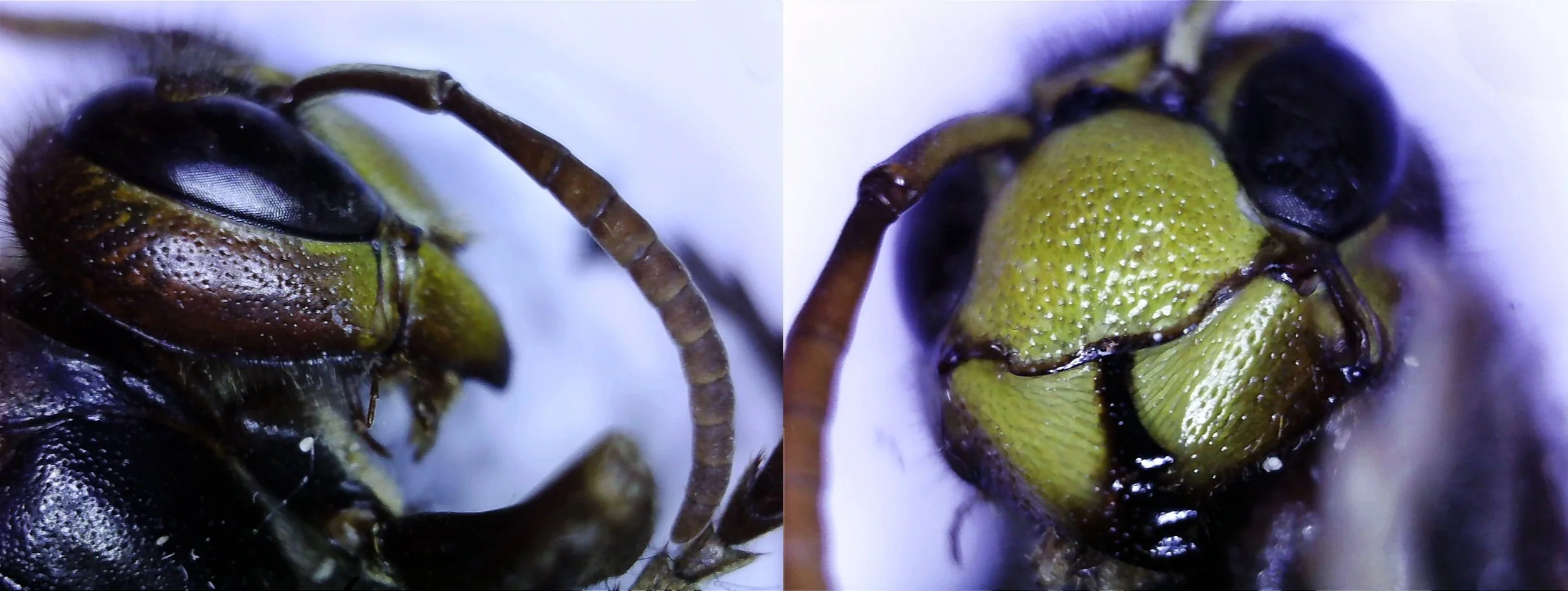
Directory of Anticipated Deviations begins with a collection of dead wasps (German wasps, Vespula germanica, which died and were collected in southwestern Berlin) and their microscopic photographs. Working from these particular bodies, I use AI to develop a thought experiment about a less hospitable future. Within the narrative, each transformation (DAD-001 – DAD-025) responds to an environmental pressure. Each also creates a new vulnerability.
The images adopt the matter-of-fact format of a natural history catalogue. They present an imagined future as though its remains were already available for examination. Their developmental trajectories are artistic speculations, not biological predictions. The word “anticipated” in the title therefore poses an unsettling challenge: how far must living conditions deteriorate before even a body like this begins to seem a logical consequence?
¹ A. Höcherl et al., ‘Scratching the tip of the iceberg’, ZooKeys, 1188 (2024), pp. 305–386.
² D. Lima et al., ‘Tributyltin-induced imposex in marine gastropods involves tissue-specific modulation of the retinoid X receptor’, Aquatic Toxicology, 101 (2011), pp. 221–227.
³ ‘The effect of trematode infection on amphibian limb development and survivorship’, Science (1999).
⁴ N. M. Reid et al., ‘The genomic landscape of rapid repeated evolutionary adaptation to toxic pollution in wild fish’, Science, 354 (2016), pp. 1305–1308.
⁵ ‘Spatial and temporal regulation of the homeotic selector gene Antennapedia is required for the establishment of leg identity in Drosophila’, Developmental Biology (2004).
⁶ ‘Development of functional ectopic compound eyes in scarabaeid beetles by knockdown of orthodenticle’, Proceedings of the National Academy of Sciences (2017).
DAD-001
The Multi-Antennate
(Ramificatio antennarum)
Description
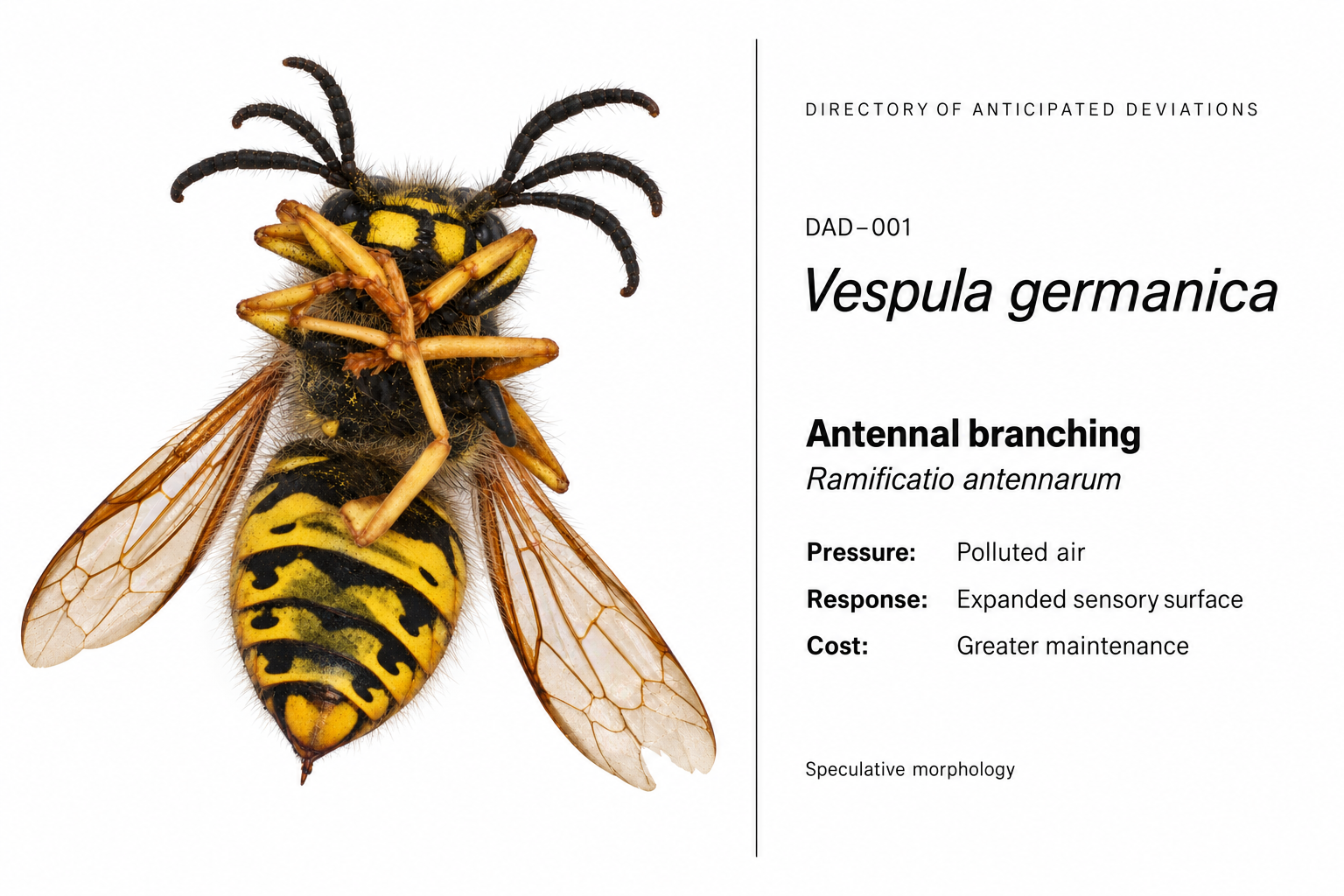
In an atmosphere where pollutants alter and dissipate scent trails, the Multi-Antennate deploys a wide-reaching sensory apparatus. Its two antennae branch into six finely hairy segments of unequal length. One reaches forward, while others probe to the sides or remain close to the head. Within this design, the loss of reliable chemical orientation favors an ever-expanding sensory surface: the body taps into the last discernible traces of its environment. Food, a nest, and fellow wasps are pieced together from scattered remnants. The wasp carries a delicate landscape of searching before her.
Scientific Context
It has been experimentally demonstrated that air pollution can impair chemical communication: Ozone alters sexual scent signals in fruit flies; nitrate radicals impair flower scents and the orientation of nocturnal pollinators.¹² At the same time, tobacco hawk-moths can, under experimental conditions, learn to associate ozone-altered scent mixtures with food.³ The branched wasp antennae represent a speculative extension of these findings, not a documented effect of pollutants. Their tragedy lies in a mismatch: a larger receptor surface area cannot retrieve information that has already been destroyed. The body invests more and more in perception, while the world becomes less and less comprehensible.
¹ Jiang et al., “Ozone exposure disrupts insect sexual communication,” Nature Communications (2023).
² Chan et al., “Olfaction in the Anthropocene: NO₃ negatively affects floral scent and nocturnal pollination,” Science (2024).
³ Cook et al., “Pollination in the Anthropocene: a Moth Can Learn Ozone-Altered Floral Blends,” Journal of Chemical Ecology (2020).
DAD-002
The Gripper
(Antennae prehensiles)
Description
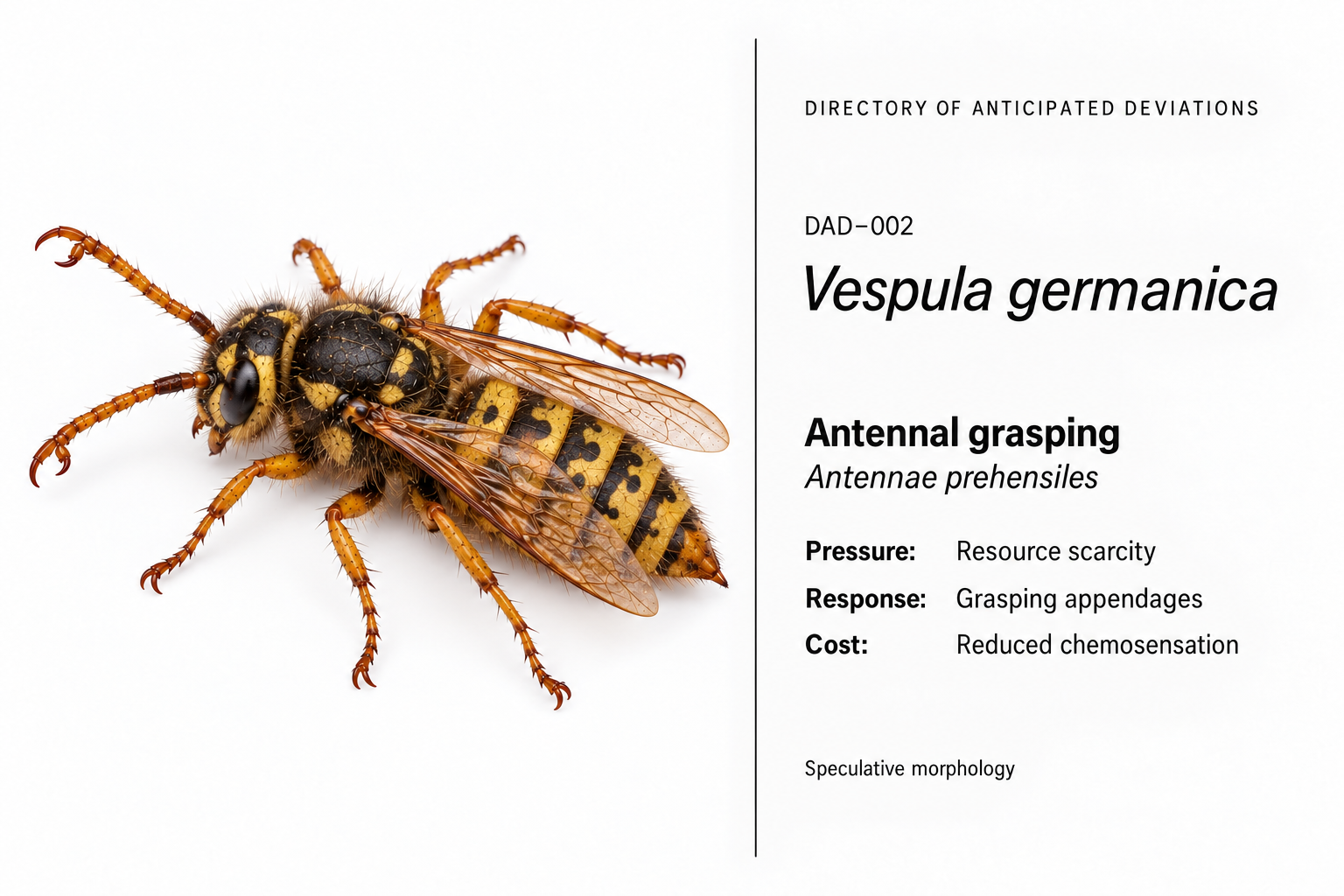
Recurring droughts have made soft plant fibers and readily accessible food scarce. Usable material lies deep within cracks, beneath dry crusts, and between hardened layers. It is in this environment that the Gripper appears: its antennae have evolved into powerful, segmented tools. Unevenly curved terminal segments grasp, pry, and pull, while the six original legs support the body. The head gains its own working space. What once merely felt out the environment can now open it up. Within the developmental narrative described here, this new capacity for action provides access to resources that remain inaccessible to other bodies.
Scientific Context
The transformation of antennae into leg-like structures is one of the most striking findings in developmental genetics. In Drosophila, changes in the activity of the Hox gene Antennapedia can alter the identity of a body appendage. Studies show how closely antenna and leg development are linked and how crucial spatial and temporal gene regulation is.¹²³ These studies provide no evidence for drought-induced grasping antennae or their utility in wasps. The proposal combines the proven malleability of the body plan with a hypothetical scenario of natural selection. The cost of this transformation is loss: where a tool emerges, a part of the original sensory organ disappears. The grasping tip achieves more—yet at the same time may perceive less of what it reaches.
¹ Emerald and Cohen, “Spatial and temporal regulation of the homeotic selector gene Antennapedia is required for the establishment of leg identity in Drosophila,” Developmental Biology (2004).
² Cummins et al., “Comparative analysis of leg and antenna development in wild-type and homeotic Drosophila melanogaster,” Development Genes and Evolution (2003).
³ Dong, Chu, and Panganiban, “Control of antennal versus leg development in Drosophila,” Nature (1998).
DAD-003
The Heat-Reflecting
(Tegumentum reflectens)
Description
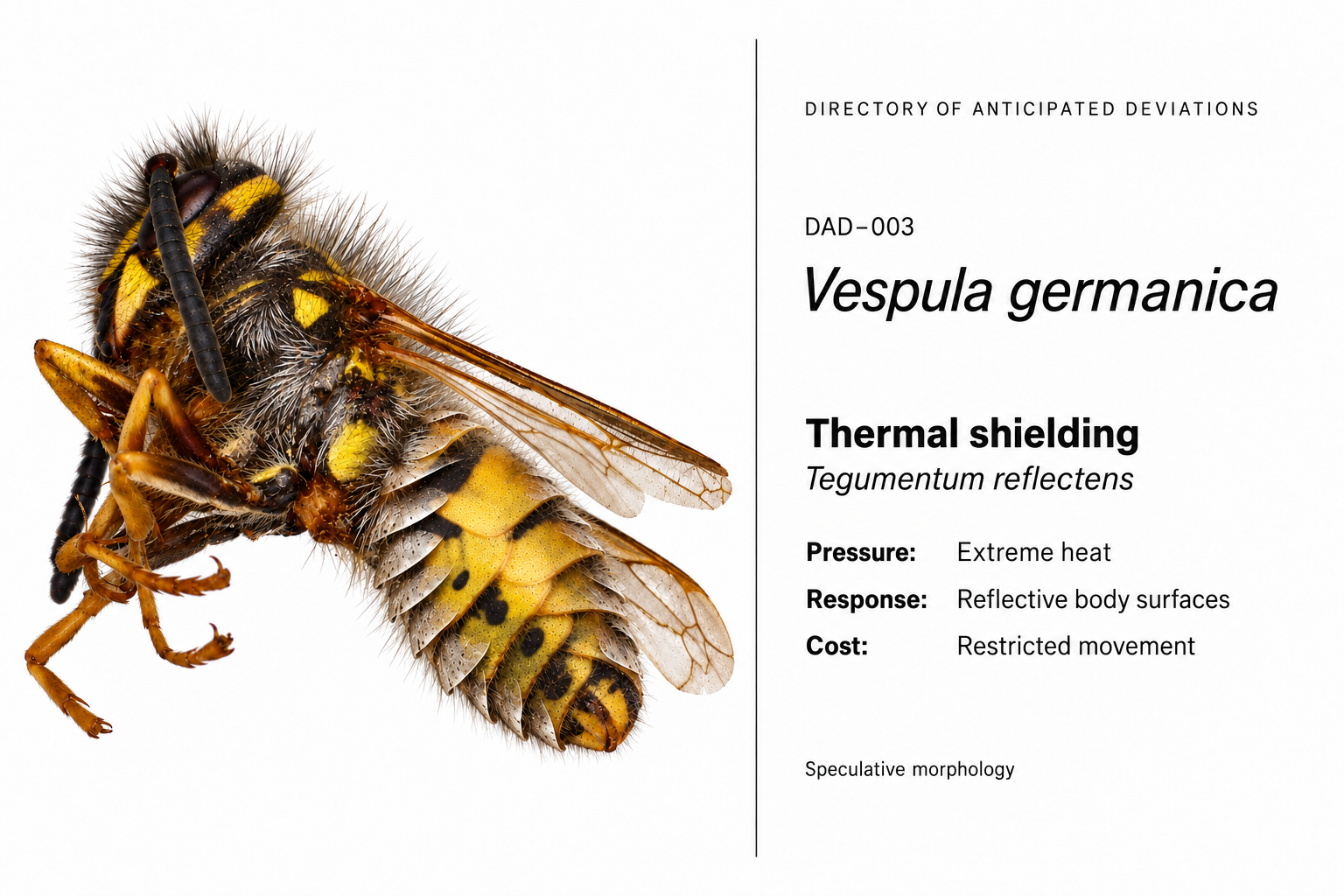
The local average temperature has risen by three degrees in this scenario. Prolonged heat waves reduce the number of hours available for gathering food and tending to the nest. The Heat-Reflecting ant compensates for this lost time with a reflective body surface: silvery microhairs cover its thorax, and lateral lamellae fan out from the abdomen at varying angles. Light refracts off these fine structures and is reflected back. Under sustained heat stress, bodies with a more favorable radiation balance gain an advantage. The body surface becomes a finely structured instrument of heat exchange, enabling activity where other animals must already seek shelter.
Scientific Context
Saharan silver ants already possess this type of optical heat protection: Their specialized hairs reflect solar radiation and aid in heat dissipation.¹² A correlation between body color and climate is also evident in European butterflies and dragonflies: In warmer regions, lighter-colored species have an advantage.³ In Heat-Repelling, this correlation reaches its physical extreme. Their expansive lamellae both protect and hinder; nest openings become bottlenecks, and movement loses its freedom. While the body regains a few hours, its food supply continues to dry up. It endures longer in a world that can sustain it less and less.
¹ Shi et al., “Keeping cool: Enhanced optical reflection and radiative heat dissipation in Saharan silver ants,” Science (2015).
² Willot et al., “Total Internal Reflection Accounts for the Bright Color of the Saharan Silver Ant,” PLOS ONE (2016).
³ Zeuss et al., “Global warming favors light-colored insects in Europe,” Nature Communications (2014).
DAD-004
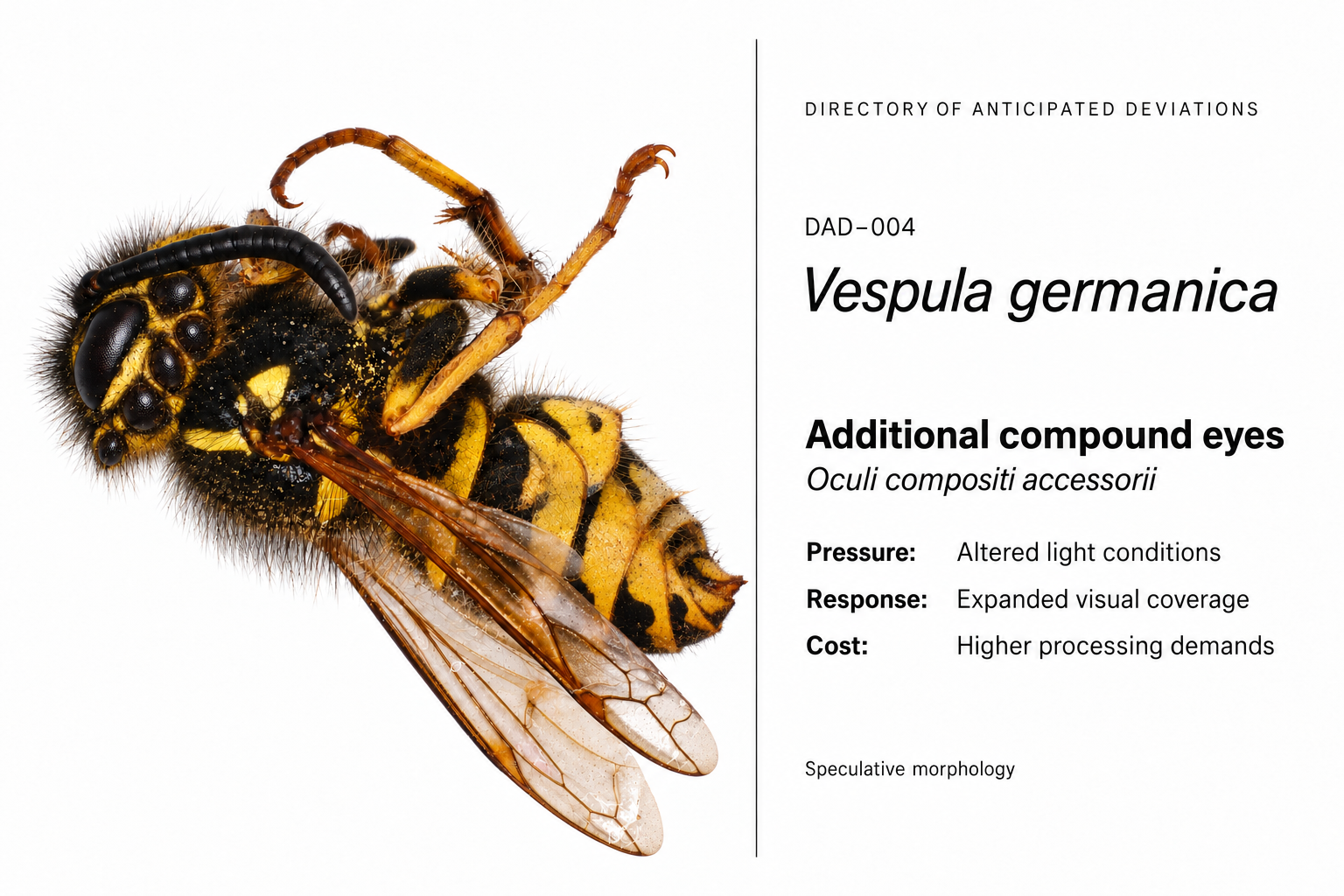
The Multi-Sighted
(Oculi compositi accessorii)
Description
Persistent daytime heat shifts foraging to twilight hours. Between artificially lit areas, dark cavities, and abrupt shadows, visual conditions shift rapidly within a very confined space. In this fragmented environment, the Multi-Sighted develops additional compound eyes. Small, unevenly sized fields of view cover the surface of its head, oriented laterally and diagonally upward. The head becomes a densely populated landscape of perception. Within this line of development, the complex environment favors bodies capable of detecting movements from multiple directions simultaneously. Where a single gaze previously provided partial orientation, a multi-layered panorama now emerges.
Scientific Context
Extra eyes have already become a reality in developmental biology: In leaf-horn beetles, experimental manipulation of orthodenticle activity resulted in the formation of additional, functional compound eyes.¹ Studies on the development of the beetle’s head show how existing genetic regulatory mechanisms can take on new roles. ² In fruit flies, the targeted activation of the eyeless gene led to the formation of eye structures on the legs and wings, among other places.³ The “multi-sighted” being carries this adaptability into an environment where perception becomes increasingly complex. More eyes do not necessarily mean better vision in the dark. Additional sensory input requires processing, while food and energy are becoming scarcer. Within this body, a disturbing possibility crystallizes: The world remains visible, yet the ability to react to it in time can no longer keep pace with its perception.
¹ Zattara et al., “Development of functional ectopic compound eyes in scarabaeid beetles by knockdown of orthodenticle,” Proceedings of the National Academy of Sciences (2017).
² Zattara et al., “Neofunctionalization of embryonic head patterning genes facilitates the positioning of novel traits on the dorsal head of adult beetles,” Proceedings of the Royal Society B (2016).
³ Halder, Callaerts, and Gehring, “Induction of ectopic eyes by targeted expression of the eyeless gene in Drosophila,” Science (1995).
DAD-005
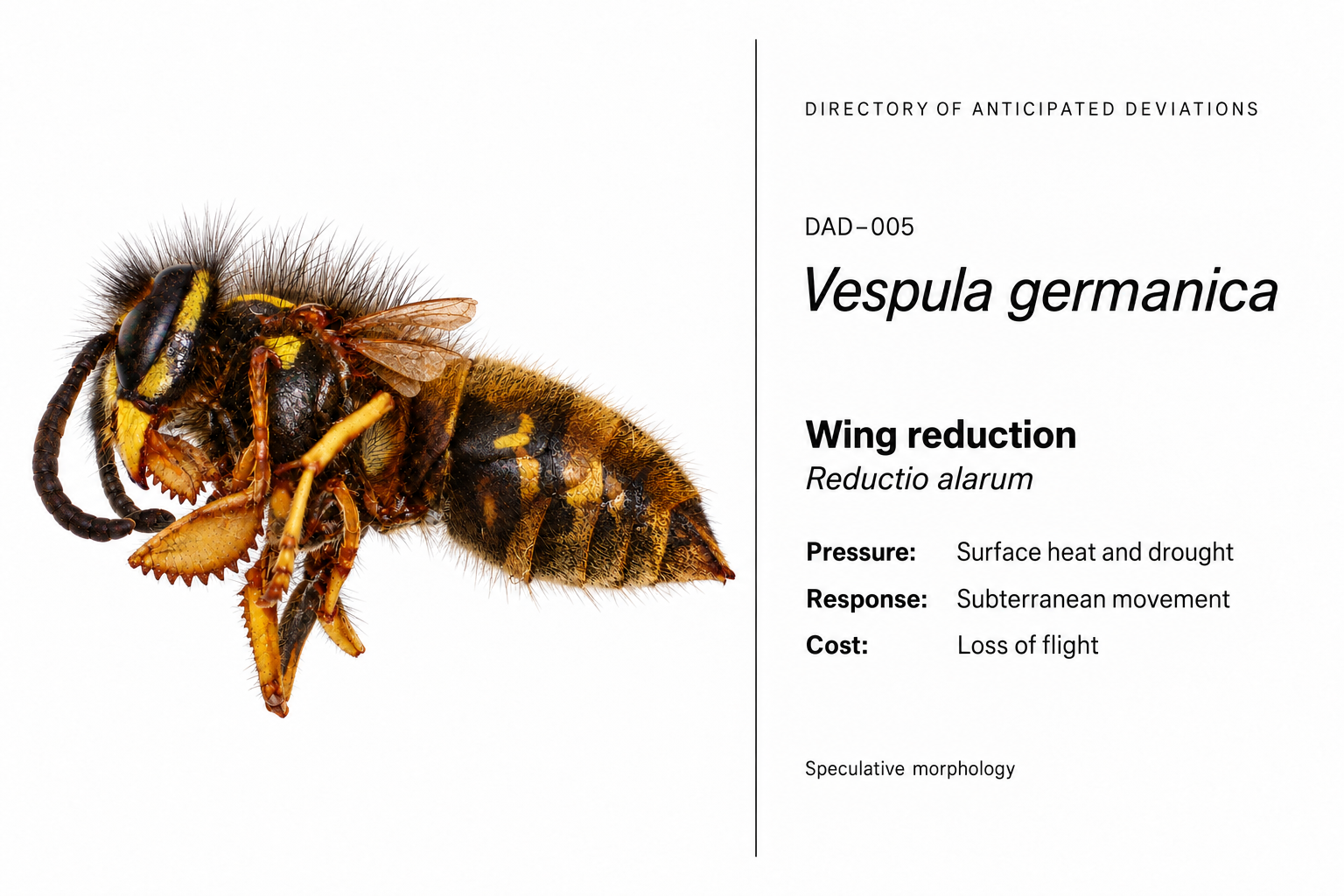
The Ground Dweller
(Reductio alarum)
Description
Recurring heat waves and prolonged drought are turning the soil’s surface into an increasingly inhospitable habitat. Cooler layers of soil and sheltered cavities are becoming increasingly important. The Ground Dweller explores this hidden landscape with a body whose strength is focused on digging. Her wings have regressed to short, unevenly folded remnants; her front legs have broadened into serrated tools. They dislodge soil particles, widen crevices, and push her body through narrow passages. Within this evolutionary lineage, the subterranean lifestyle favors a powerful, compact body. The wasp gains access to spaces that were previously beyond her reach.
Scientific Context
The loss of wings may be accompanied by a shift in the allocation of physical resources: In stoneflies, smaller wings and reduced flight musculature have been linked to a larger ovary mass.¹ Studies of beetles associate the inability to fly with greater geographic differentiation and speciation.² In Hawaii, male crickets lost their ability to sing due to altered wing structures under the selective pressure of an acoustically oriented parasitoid.³ What becomes dispensable or dangerous may disappear—with consequences that extend beyond the individual function. The ground-dweller’s digging tools open up shelters, but its atrophied wings block escape routes. When water or pollutants penetrate the tunnels, the lifesaving habitat lies beyond what her body can still reach.
¹ McCulloch et al., “Dispersal-fecundity trade-offs in wild insect populations,” Journal of Evolutionary Biology (2025).
² Ikeda et al., “Loss of flight promotes beetle diversification,” Nature Communications (2012).
³ Tinghitella, “Rapid evolutionary change in a sexual signal: genetic control of the ‘flatwing’ mutation that renders male field crickets (Teleogryllus oceanicus) mute,” Heredity (2008).
DAD-006
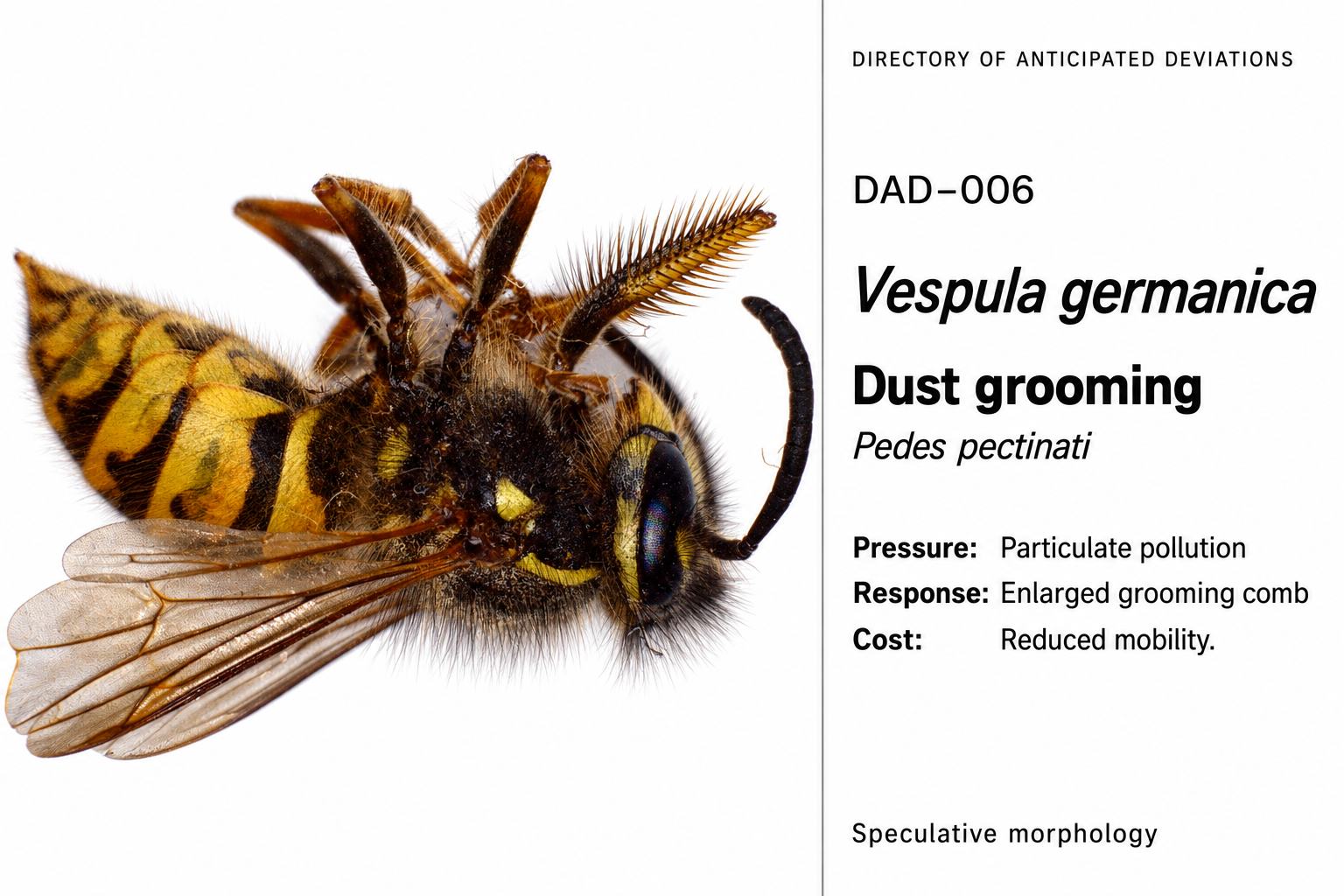
The Dust-Grooming
(Pedes pectinati)
Description
The dust-grooming carries a delicate cleaning tool on its front leg. An enlarged comb unfolds along its inner side: closely spaced teeth, sturdy bristles, and fine hairs form a tiered structure through which she pulls her antennae. The environmental pressure driving this evolution is constant exposure to stirred-up soil dust, soot, and abrasion. New particles are constantly depositing themselves on the sensitive sensory surfaces. In this evolved form of the German wasp, the unassuming cleaning device has developed into a striking bodily tool. With every stroke through the comb, she clears her sensory organs once again. The precision of this structure is astonishing: a single leg is responsible for maintaining the very senses the wasp uses to find food, fellow wasps, and her way through the world.
Scientific Context
In the ant Camponotus rufifemur, the bristles, comb, and brush on the front leg already function as a multi-stage particle filter: Different structures remove contaminants of varying sizes from the antennae.¹ Experiments on cockroaches show what happens without this grooming: Deposits cover the pores of the sensory hairs, and the antennae respond less sensitively to odors. ² In houseflies, even brief exposure to airborne particles impaired their perception of food and mating odors. ³ The dust-combing ant takes this existing cleaning principle to the level of a physical specialization. Its enlarged apparatus inherently limits the mobility of the front leg; the constant cleaning takes time that is otherwise needed for foraging and care. The body can still keep its senses clear. The environment, which repeatedly challenges it, remains.
¹ A. Hackmann et al., “Functional morphology and efficiency of the antenna cleaner in Camponotus rufifemur ants,” Royal Society Open Science, 2 (2015), 150129. Article.
² K. Böröczky et al., “Insects groom their antennae to enhance olfactory acuity,” Proceedings of the National Academy of Sciences (2013). Article.
³ “Short-term particulate matter contamination severely compromises insect antennal olfactory perception,” Nature Communications, 14 (2023), 4112. Article.
DAD-007
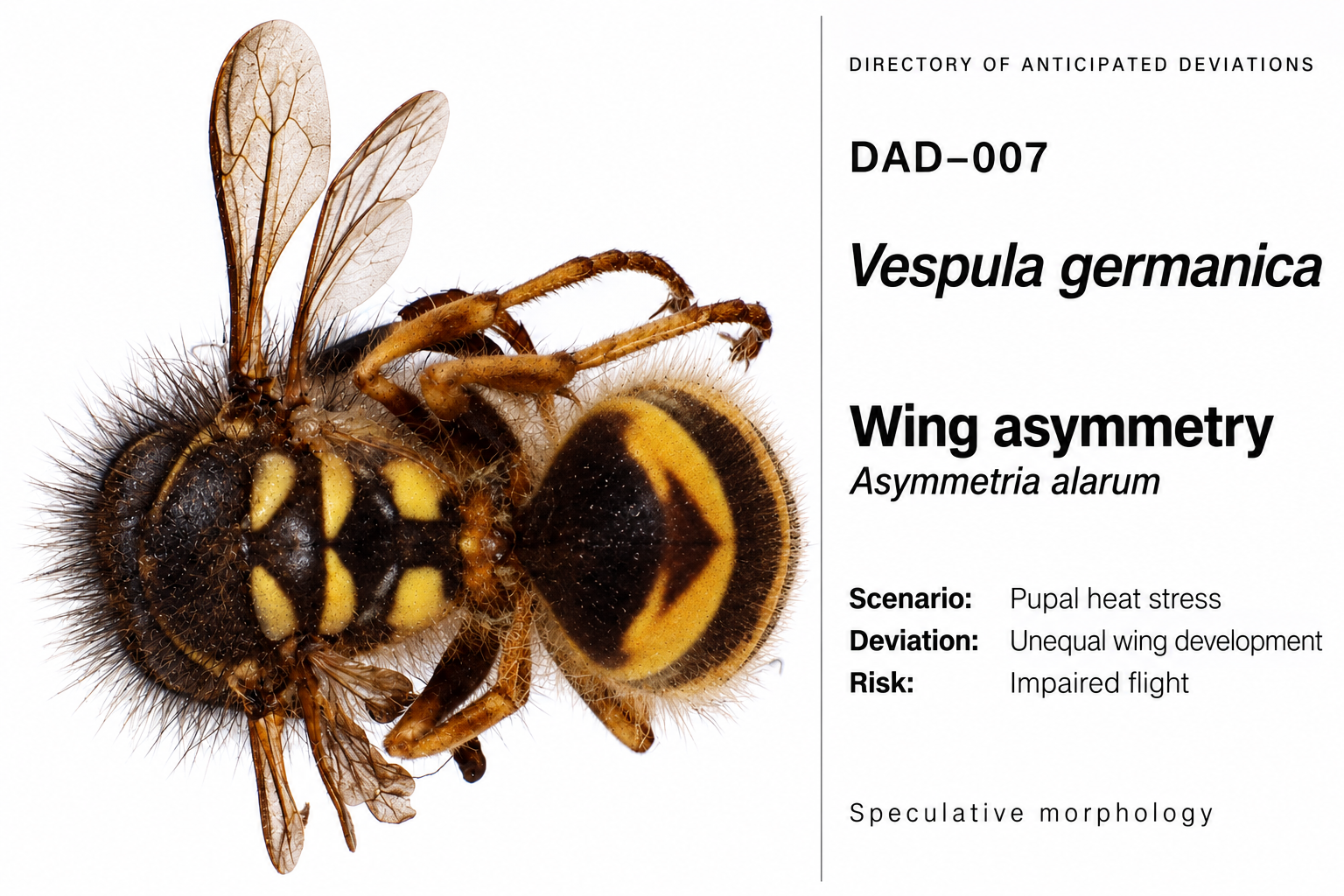
The Asymmetrical-Winged
(Asymmetria alarum)
Description
ThThe Asymmetria alarum exhibits two distinct patterns of the same physical development. On one side, long, translucent wings unfold, their veins dividing the membrane into finely defined sections. On the opposite side, the wing surfaces remain shortened, curled, and folded in on themselves. The architecture of flight is still recognizable there, but the wings do not reach their fully extended form. The design assumes that the environmental stress involves recurring overheating during pupal development. This striking contrast highlights just how much coordination is required for the development of a body capable of flight. Here, a deviation arises whose potential consequences range from impaired maneuverability to the loss of flight capability.
Scientific Context
In the buff-tailed bumblebee (Bombus terrestris), experimental heat stress during pupal development led to more frequent wing deformities. Even in individuals without obvious malformations, wing shape and lateral symmetry were altered. ¹ Recurring heat stress during pupation can also have effects beyond this developmental stage: Another study documented wing malformations and a reduced lifespan in adult bumblebees.² In fruit flies, the occurrence of abnormal wings following heat shocks depended on the intensity, duration, and timing of the stress.³ The vulnerable phase thus occurs
¹ S. Laußer and C. Kurze, “Impact of thermal stress during pupal development in a key pollinator,” Proceedings of the Royal Society B, 292 (2025), 2025–2029.
² M. M. Mandlinger and C. Kurze, “Cyclic thermal stress during pupation triggers irreversible carry-over effects in a key pollinator,” Communications Biology (2026).
³ K. D. Williams et al., “Effect of heat shock, pretreatment, and hsp70 copy number on wing development in Drosophila melanogaster” (2003).
About the Project
rsal-fecundity trade-offs in wild insect populations,” Journal of Evolutionary Biology (2025).
² Ikeda et al., “Loss of flight promotes beetle diversification,” Nature Communications (2012).
³ Tinghitella, “Rapid evolutionary change in a sexual signal: genetic control of the ‘flatwing’ mutation that renders male field crickets (Teleogryllus oceanicus) mute,” Heredity (2008).